Table of Contents
Titanium order minimum quantity is the smallest commercially and technically workable batch for a defined grade, product form, size, condition, manufacturing route, and documentation package. It is not a universal weight that applies to every titanium product. Buyers should ask what creates the minimum and whether stock cutting, shared conversion, samples, or phased releases can meet the project without changing the approved specification.
The practical question is not only “What is your MOQ?” It is “What supply route supports my requirement, and which parts of that route create a minimum batch?” That question produces options a supplier can evaluate.
What does titanium order minimum quantity mean?
An MOQ can be expressed as pieces, kilograms, full lengths, sheets, mill lots, furnace loads, machining batches, or packaging units. The unit matters. Ten finished parts may require more than ten blanks because setup pieces, test material, machining allowance, and process loss must be considered. Conversely, a stock item may be available as one cut piece even when new mill production has a much larger minimum.
Ask the supplier to identify whether the minimum comes from available stock, upstream material production, conversion equipment, custom tooling, machining setup, heat treatment, testing, finishing, or freight handling. The answer helps procurement decide whether to change quantity, timing, or supply route without weakening the technical requirement.
XFDY offers titanium mill product forms and custom titanium manufacturing. Buyers should distinguish a raw-material MOQ from the batch needed for a finished component.
| MOQ driver | Why a minimum can arise | Buyer response |
|---|---|---|
| Existing stock | Material is held in fixed lengths, sheets, or lots | Ask for cut-size availability and remaining-piece policy |
| New material production | Melting, rolling, forging, drawing, or finishing needs a workable campaign | Consider forecast consolidation or an approved alternate size |
| Machining setup | Programming, tooling, fixturing, and inspection are prepared for a batch | Separate prototype and repeat-production quantities |
| Testing and documents | Specimens, laboratory work, witnessing, or reports have fixed preparation effort | Order only the evidence the application actually requires |
| Packaging and freight | Long, heavy, or mixed items need suitable packing and handling | Plan shipment consolidation without mixing traceability |
Why product form changes the MOQ
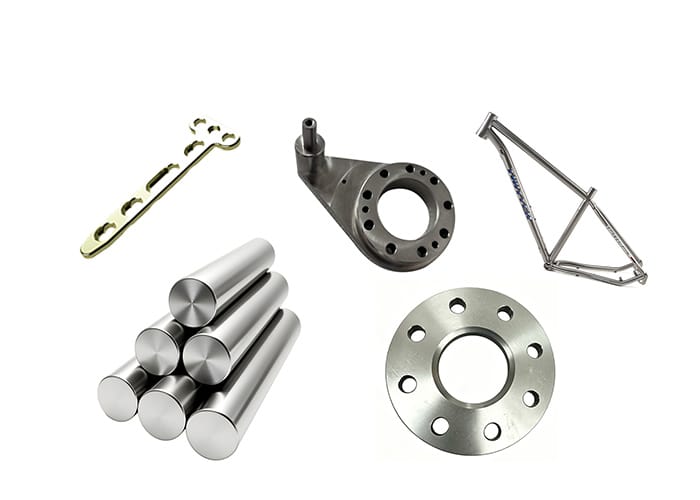
Titanium bar, plate, sheet, tube, wire, forgings, and custom parts follow different manufacturing and inventory routes. A minimum for bar cannot be transferred to tube, and a minimum for a standard sheet size says little about a custom forging. Begin with the product form that matches the intended manufacturing route.
Relevant product standards help define that form. ASTM B348/B348M covers titanium bars and billets, ASTM B265 covers strip, sheet, and plate, and ASTM B338 covers seamless and welded titanium tube for condenser and heat exchanger service. These standards define technical scopes; they do not set a supplier’s commercial MOQ.
Select the correct form before optimizing quantity. Buying plate because a small piece is available may create unnecessary machining if the component should start from bar or a near-net forging. The lowest purchase quantity can still create the highest process waste.
How grade, size, and condition affect minimum quantity
Common grade and size combinations are more likely to be available from stock than uncommon combinations, but availability must be confirmed at the time of inquiry. A nonstandard diameter, narrow tolerance, special surface condition, or unusual delivery condition can move the requirement from stock supply to new processing.
Do not change grade to meet a smaller minimum without engineering approval. Grade affects chemistry and mechanical requirements, and the acceptable choice depends on the application. Likewise, changing from a specified ground bar to a rougher condition may transfer work and risk to machining.
For bars and rods, review the titanium bars and rods selection guide. For plate and sheet, use the titanium plate and sheet specification guide. A clear size range, tolerance, and condition lets the supplier identify genuine stock alternatives instead of guessing.
Separate material MOQ from production-batch economics
A supplier may be able to purchase one bar but still need a larger machining batch to spread setup, programming, fixture preparation, first-piece inspection, and process verification. That does not mean the buyer must accept an arbitrary quantity. It means the quotation should show which effort is fixed and which scales with pieces.
For custom parts, ask for separate options: prototype or sample quantity, first production batch, and repeat batch. The commercial comparison should cover more than a per-piece figure because the process route, inspection depth, document set, packaging, and approval scope may also change. Evaluate the complete supply scope and its operational usefulness.
When demand is recurring, a larger manufacturing batch with scheduled releases may be practical, but clarify ownership, storage, shelf or preservation controls where relevant, release dates, and what happens if the drawing changes. Do not authorize production beyond a stable forecast merely to reach a lower unit cost.
Use samples without confusing them with production supply
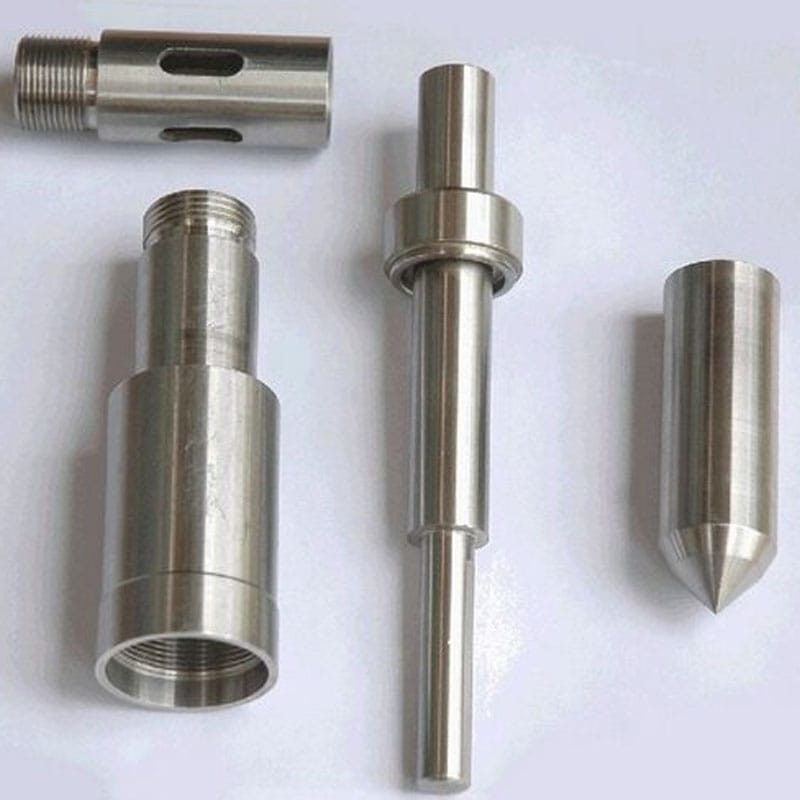
A sample order can confirm geometry, assembly, appearance, documentation format, or a proposed process before a repeat batch. It does not prove that every production condition is identical. Record what the sample represents and which approvals remain open.
The titanium sample order evaluation guide provides a framework for checking material, machining, and documents. If sample pieces use material from available stock but production needs a new lot, require the production material evidence and confirm whether another verification step is needed.
Avoid demanding production-level quantities before the design is stable. Equally, avoid using repeated one-piece samples as a substitute for agreeing the production specification. The transition point should be explicit.
Compare small-order options on the same basis
A small-order quotation may exclude items that another supplier includes: cutting, finish, dimensional reports, material records, export packing, or transport to a named place. Compare the same technical scope, documentation, and delivery boundary.
International delivery terms can change what appears inside the quotation. The ICC Incoterms 2020 guidance explains how commonly used trade rules allocate obligations, risks, and costs. Those rules do not define product quality or quantity, so keep the titanium specification and acceptance requirements separate.
- Confirm the exact grade, form, size, condition, and quantity in each option.
- Ask whether the offer uses existing stock or new production.
- List cutting, machining, finishing, inspection, and document scope.
- Define packaging unit, net quantity, and any permitted overrun or underrun.
- Compare the named delivery point and shipment arrangement.
- Record how unused material or partial lengths will be handled.
How can buyers reduce excess material responsibly?
First, provide a forecast and ask whether several releases can be consolidated into one material purchase. Second, consider standard parent sizes with an optimized cutting plan. Third, ask whether an approved nearby size can be machined without excessive waste. Fourth, combine parts that use the same verified grade and condition, provided traceability remains clear.
Do not combine orders merely because both are called titanium. Different grades, product standards, conditions, or customer requirements may prevent consolidation. A shared package or purchase order must not blur lot identification.
For cut stock, the titanium bar cut-to-size guide shows how length, allowance, and identification interact. An efficient nesting or cut plan should still leave enough material for workholding and final machining.
What should an MOQ inquiry include?
Send enough information for the supplier to identify the actual minimum driver. Include the application category, product form, grade, standard and edition, dimensions, tolerances, condition, quantity now, expected repeat demand, sample needs, inspection, documents, packaging, destination, and desired timing.
Please review the titanium order minimum quantity for the attached specification. Identify whether the minimum is driven by stock unit, new material production, processing setup, testing, packaging, or another constraint. Provide separate options for sample, first production batch, and repeat supply where practical. State all technical assumptions and do not change grade, standard, condition, or dimensions without written approval.
Send XFDY your requirement and forecast for a product-specific MOQ review. Include the full specification and expected release pattern so available stock, cut-size supply, and custom production can be evaluated on the same basis.
Conclusion
Titanium order minimum quantity comes from a defined supply route, not from the metal name alone. Buyers can make better decisions by identifying the MOQ driver, choosing the correct product form, separating samples from production, comparing equal scopes, and using forecasts or cut plans without changing approved technical requirements.
FAQ
Is there one standard MOQ for titanium products?
No. MOQ varies with grade, form, size, condition, manufacturing route, inspection, documents, packaging, and current stock availability.
Can a supplier cut one piece from titanium stock?
Sometimes, when suitable stock exists and the cut, identification, and document requirements can be met. Confirm the remaining length policy and minimum chargeable unit.
Why is the MOQ higher for a custom titanium part?
Custom parts can require fixed setup work such as programming, tooling, fixtures, process qualification, and first-piece inspection. Ask the supplier to separate those drivers from the piece quantity.
Can different titanium parts be combined into one order?
They can be commercially consolidated when specifications and timing permit, but each grade, heat, lot, drawing, and inspection requirement must remain traceable.
Should buyers change grade to meet a lower MOQ?
Only after responsible engineering approval. Grade substitution can affect material properties, corrosion behavior, fabrication, and the applicable product specification.