Table of Contents
Ordering titanium bar cut to size sounds simple until a quotation stalls over grade, tolerance, surface finish, certificate language, or cutting allowance. The phrase looks like a buying shortcut, but it covers several practical decisions that affect machining yield and receiving inspection.
This guide is written for engineers, machining buyers, OEM purchasers, and project managers who need titanium bar cut to size for prototypes, repair jobs, or repeat production. It explains how to specify length, grade, tolerance, surface finish, and documentation in a way a supplier can quote and produce with fewer avoidable revisions.
What does titanium bar cut to size mean for industrial buyers?
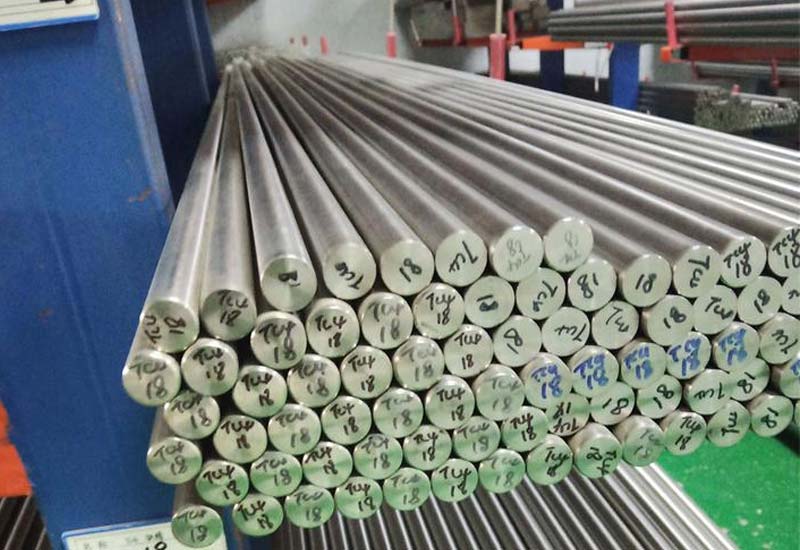
Titanium bar cut to size means bar stock is supplied in requested lengths instead of full mill lengths. For the buyer, the value is less internal sawing work, easier inventory control, and more predictable preparation before CNC machining, turning, milling, or fabrication.
A good titanium bar cut to size inquiry should not only state diameter or profile and length. It should also state grade, quantity, length tolerance, cut face expectations, surface condition, and whether material certificates are required. Without those details, two quotations can look similar while covering different production assumptions.
When titanium bar cut to size is treated as a prepared blank rather than a commodity, the buyer can align receiving inspection with the first machining operation.
For related material options, buyers can review Titanium Bars & Rods and compare downstream custom processing through Custom Titanium Block. Those pages help connect bar supply with the eventual machined part.
Which titanium grade should be selected before cutting?
The grade should be chosen before titanium bar cut to size is quoted because the grade affects availability, machining behavior, strength, corrosion performance, and inspection expectations. Commercially pure titanium grades are often discussed for corrosion resistance and formability, while alloy grades are often discussed where strength matters.
Do not ask the supplier to decide from a vague sentence such as “normal titanium bar”. A stronger RFQ explains the application, working environment, machining process, and whether Grade 2, Grade 5, Grade 23, or another grade is already required by the drawing or project specification.
For broader grade context, see How to Choose the Right Titanium Material. For general material background, buyers can also check Titanium material background.
Is Grade 2 titanium better than Grade 5 for cut-to-size bar?
Grade 2 is not automatically better than Grade 5, and Grade 5 is not automatically better than Grade 2. For titanium bar cut to size, the better grade depends on whether the buyer prioritizes corrosion resistance, mechanical strength, machining stock, weight, or a drawing requirement.
Grade 2 is a commercially pure titanium option commonly considered where corrosion resistance and ductility matter. Grade 5 is a titanium alloy commonly considered when higher strength is required. The right choice should come from the part function, not from a generic ranking.
How should length tolerance be written in an RFQ?
Length tolerance is one of the most important details in a titanium bar cut to size order. A loose tolerance may be acceptable when the buyer will machine both ends later. A tighter tolerance may be needed when the supplied length is close to the final component size.
For repeat work, titanium bar cut to size requirements should be written the same way across purchase orders so each batch can be compared against the same acceptance language.
A clear request might say that saw-cut blanks need machining allowance, or that finished-length pieces require tighter inspection. The RFQ should also say whether burrs, angled cuts, or saw marks are acceptable. Small notes like these prevent surprise rework at receiving.
What are the common shapes for cut-to-size titanium bar?
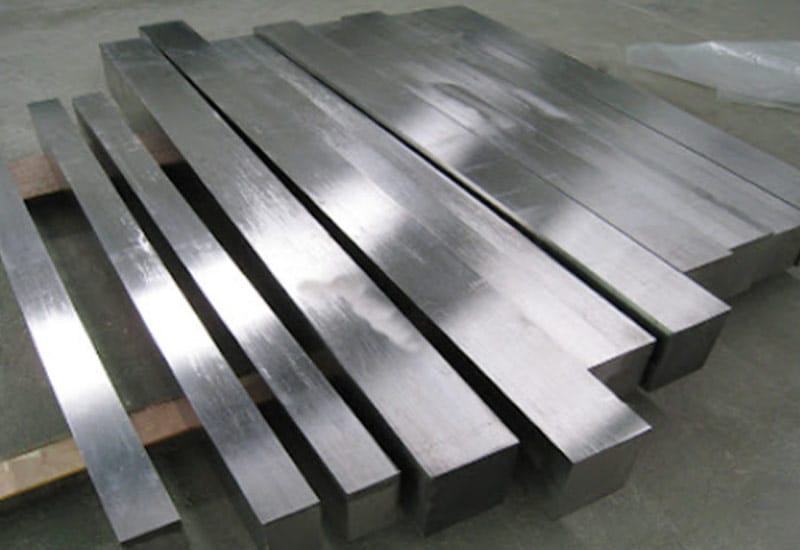
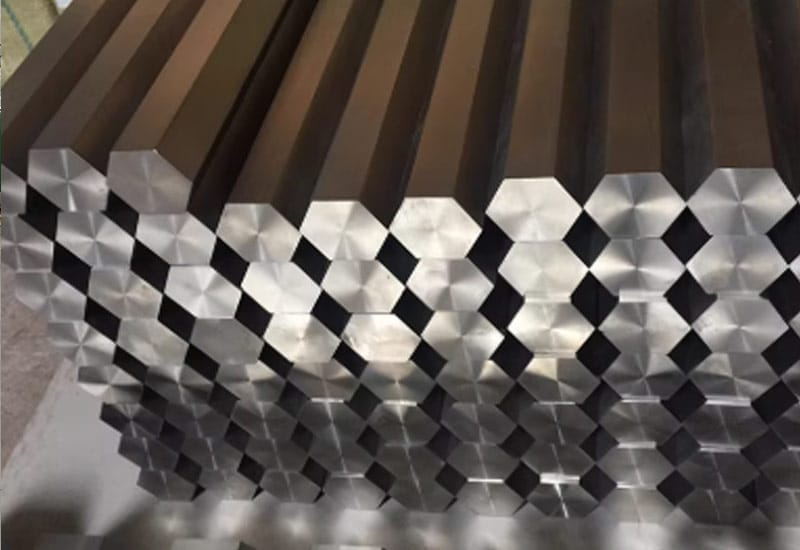
Round bar is common for turned parts, shafts, pins, spacers, and cylindrical components. Square bar can help with blocks, fixtures, and milled profiles. Hex bar may be useful where wrench flats, fastener blanks, or specific machining setups are planned.
When requesting titanium bar cut to size, buyers should name the profile, cross-section dimension, requested length, and quantity for each size. If several shapes are needed in one project, grouping them in a table helps the supplier check availability and cutting workflow.
This is especially useful when titanium bar cut to size orders include mixed round, square, and hex material for one assembly or product family.
| Buying detail | What to specify | Why it matters |
| Grade | Grade 2, Grade 5, Grade 23, or drawing requirement | Connects material choice to corrosion, strength, and machining needs |
| Profile | Round, square, hex, or special bar form | Affects stock availability and processing method |
| Length tolerance | Saw-cut blank allowance or finished-length tolerance | Prevents receiving disputes and downstream re-cutting |
| Surface finish | As-supplied, peeled, polished, or machined expectation | Helps protect visible, sealing, or machined surfaces |
| Documentation | Material certificate and inspection records if required | Supports procurement, traceability, and project approval |
What surface finish should buyers expect on titanium bar cut to size?
Surface finish should be described separately from cutting length. Titanium bar cut to size may be supplied with standard mill surface, peeled surface, polished surface, or another agreed condition depending on stock and project needs.
If the bar will be fully machined, a basic surface may be acceptable. If the bar surface remains visible or functional, the RFQ should describe scratch limits, oxidation concerns, edge condition, and packaging. For standards language and test references, buyers can search ASTM standards search.
Does Grade 5 titanium scratch easily during handling?
Grade 5 titanium can still show handling marks, even though it is valued for strength. For titanium bar cut to size, scratching is usually managed through handling, separation, wrapping, and reasonable surface expectations rather than by assuming the grade alone prevents marks.
If the cut blanks are only machining stock, minor handling marks may not matter. If visible surface quality is important, buyers should state this before production. Packaging and inspection criteria should be part of the quotation, especially for polished or presentation-facing parts.
For visible components, titanium bar cut to size should include packaging notes so finished or semi-finished surfaces are not damaged before the buyer starts machining.
What material certificate should be requested?
A material certificate is often requested with titanium bar cut to size when the buyer needs traceability, internal quality approval, or documentation for a technical project. The certificate request should be made before ordering, not after the material has shipped.
If titanium bar cut to size is intended for a regulated or documented project, certificate expectations should be attached to the RFQ instead of discussed after cutting.
Buyers should clarify whether they need chemical composition, mechanical properties, heat/lot traceability, or additional inspection records. Quality-system language can be aligned with resources such as ISO 9001 quality management, while technical teams may use NIST materials information for materials reference context.
What are the disadvantages of choosing the wrong titanium bar grade?
The wrong grade can create avoidable cost, poor machinability for the intended operation, insufficient strength, unnecessary strength, or corrosion performance that does not match the environment. In titanium bar cut to size orders, the mistake is often multiplied because every cut blank may need to be reworked or replaced.
This is why buyers should not separate grade selection from drawing review. A procurement team may be able to request a quote, but engineering should confirm application conditions, safety factors, and finishing expectations before the order is released.
How much machining allowance should be added?
Machining allowance depends on the final part geometry, saw accuracy, facing operation, workholding method, and inspection requirement. For titanium bar cut to size, buyers should avoid publishing a universal allowance because the correct value depends on the actual part.
A practical approach is to tell the supplier whether the blanks are for rough machining, near-net preparation, or final-length use. If the parts will be turned or faced at both ends, the RFQ should identify the final length and the desired blank length separately.
What should a clear RFQ include?
A complete RFQ for titanium bar cut to size should make the purchasing intent obvious. It should tell the supplier what to quote, what to document, and what not to assume. The more clearly the buyer separates required details from preferences, the faster the quote can be checked.
- Material grade or performance requirement
- Bar profile, diameter or cross-section, length, and quantity
- Length tolerance and cut-face condition
- Surface finish and packaging expectations
- Certificate, inspection, and traceability requirements
- Final application or machining process if it affects material choice
If the cut pieces will become custom machined parts later, link the RFQ to the production route. XFDY buyers often pair bar supply with related guides such as Titanium Bars and Rods Selection Guide before sending drawings for review.
FAQs
Is titanium bar cut to size suitable for CNC machining?
Yes. Titanium bar cut to size is often used for CNC machining when the buyer wants prepared blanks rather than full-length stock. The RFQ should include machining allowance, grade, profile, and tolerance requirements.
Can titanium bar cut to size be ordered in round, square, and hex profiles?
Yes, common profiles include round, square, and hex bar, depending on availability and the final part. Buyers should list each profile and dimension separately so the supplier can quote accurately.
What are the downsides of using titanium instead of stainless steel?
Titanium can require more careful machining, grade selection, and sourcing communication than stainless steel. The advantage is application-dependent, so buyers should compare corrosion exposure, weight needs, strength, and fabrication route.
Are titanium cut bars supplied with certificates?
Certificates can often be requested, but the exact document requirements should be stated before ordering. The buyer should specify whether chemical, mechanical, heat/lot, or inspection records are needed.
Why does a supplier ask for the final application?
The final application helps the supplier review whether the grade, tolerance, surface finish, and documentation fit the project. For titanium bar cut to size, application context can prevent a quote that looks correct but misses the real engineering need.
Send a better cut-to-size bar inquiry
If you need titanium bar cut to size for machining, tooling, prototypes, or production components, send XFDY Titanium the grade, profile, length, tolerance, quantity, surface finish, and certificate needs. The team can review whether standard bar stock, cut blanks, or a custom titanium route is the better fit. Start from Contact Us when drawings or quantities are ready.