Choosing a titanium material is not simply a matter of selecting the strongest grade available. The right choice depends on how the component will be used, what environment it will operate in, how it will be manufactured, and which standards it needs to meet.
A titanium material that works well for a chemical processing component may not be the best choice for an aerospace fastener or a medical implant. Even within the same application, different product forms, manufacturing processes, and mechanical requirements can change the material selection.
For engineers and purchasing teams, a practical titanium material selection process should consider the application first and the material grade second.
Table of Contents
What Should You Consider When Selecting Titanium Material?
Before comparing specific grades, define the requirements of the finished component.
The most important factors usually include:
- Required strength
- Corrosion environment
- Operating temperature
- Weight requirements
- Formability
- Machinability
- Welding requirements
- Product geometry
- Manufacturing process
- Applicable standards
- Quantity and availability
- Cost
These factors are connected. A higher-strength alloy may provide better mechanical performance but require more demanding machining. A commercially pure grade may provide excellent corrosion resistance and formability but may not provide enough strength for a heavily loaded component.
The best titanium material is therefore the one that meets the actual requirements without unnecessarily increasing material or manufacturing costs.
Start With the Application, Not the Grade
A common mistake in material selection is starting with a familiar grade such as Grade 5 and trying to make it work for every project.
Instead, begin with the component’s operating conditions.
Ask:
Where will the part be used?
What loads will it experience?
Will it contact seawater, chemicals, or body fluids?
What temperature will it see?
Does it need to be forged, machined, bent, welded, or formed?
What standard or certification does the customer require?
These questions quickly narrow the range of suitable titanium materials.
For example, commercially pure titanium can be attractive when corrosion resistance and formability are more important than maximum strength. Ti-6Al-4V, commonly known as Grade 5, becomes more relevant when high strength-to-weight performance is required. Grade 23 Ti-6Al-4V ELI is commonly specified for certain demanding medical applications.
Titanium alloy selection guides from engineering manufacturers similarly emphasize strength, corrosion environment, temperature, manufacturing method, and cost rather than choosing a grade based on strength alone.
Match the Titanium Material to the Required Strength
Strength is one of the first properties engineers consider, but it should not automatically be the deciding factor.
Commercially pure titanium grades generally provide lower strength than titanium alloys but can offer advantages in ductility, formability, and corrosion resistance.
Grade 5 Ti-6Al-4V is a widely used higher-strength titanium alloy and is often considered when a component requires a strong combination of strength and relatively low weight.
A simplified selection approach looks like this:
| Requirement | Titanium Material to Consider |
|---|---|
| High ductility and forming | Commercially pure titanium |
| Balanced corrosion resistance and strength | Grade 2 |
| Higher strength for industrial components | Grade 4 or Grade 5 |
| High strength-to-weight performance | Grade 5 Ti-6Al-4V |
| Selected implant applications | Grade 23 Ti-6Al-4V ELI |
| Specialized corrosion environments | Grade 7 or other corrosion-resistant grades |
These are starting points rather than universal rules. The final selection should always be verified against the required specification, material condition, dimensions, and service environment.
ASTM specifications distinguish titanium grades by chemical composition and product form. For example, ASTM B265 covers titanium and titanium alloy strip, sheet, and plate and includes commercially pure grades, Grade 5 Ti-6Al-4V, Grade 7, Grade 9, Grade 12, and Grade 23 among others.
Consider Corrosion Resistance
Titanium is often selected because of its corrosion resistance, but different service environments still need to be evaluated carefully.
Marine water, chemical solutions, process fluids, and other corrosive environments can impose very different requirements.
For marine applications, titanium can be considered for components such as piping, heat exchangers, fittings, and fasteners.
For chemical processing, material selection should account for the exact chemical composition, concentration, temperature, flow conditions, and presence of contaminants.
This is especially important because “corrosion resistant” does not mean that every titanium grade will perform identically in every environment.
Grade 2 is commonly considered for applications where corrosion resistance and moderate mechanical performance are required. In more specialized chemical environments, palladium-containing grades such as Grade 7 may be considered when their specific corrosion performance is appropriate.
When selecting a titanium material for a corrosive environment, provide the supplier with the actual service conditions rather than simply stating “corrosion resistant.”
Think About Operating Temperature
Temperature can significantly affect material selection.
A component operating at room temperature has different requirements from one exposed to prolonged elevated temperatures, thermal cycling, or cryogenic conditions.
At elevated temperatures, strength retention, oxidation behavior, creep resistance, and microstructural stability become increasingly important.
For lower-temperature industrial applications, commercially pure titanium and common titanium alloys may provide sufficient performance depending on the design.
For higher-temperature applications, specialized titanium alloys may be considered instead of standard grades.
Temperature should therefore be treated as an engineering requirement, not simply a specification after the material has already been selected.
If your component operates outside normal ambient conditions, include the minimum and maximum service temperatures when requesting a titanium material quotation.
Choose the Right Material for the Manufacturing Process
Material selection and manufacturing method should be considered together.
A titanium grade that performs well in the finished product may not be the easiest material to forge, machine, weld, or form.
Titanium for Forging
Forging is commonly used to produce components with controlled shapes and desirable mechanical properties.
Ti-6Al-4V is widely used for forged components, while commercially pure grades may be selected for applications where corrosion resistance and formability are more important.
The forging temperature range and process parameters need to be controlled according to the alloy and required properties.
ASTM B381 covers titanium and titanium alloy forgings and provides specifications for different grades and forging products.
Titanium for CNC Machining
Titanium can be machined successfully, but it requires appropriate cutting parameters, tooling, coolant management, and process control.
Grade 2 and Grade 5 have different machining characteristics, and the choice between them should consider both the required properties of the finished part and the complexity of the geometry.
Titanium’s low thermal conductivity means that heat can concentrate around the cutting zone, making tool management particularly important during machining.
For a custom-machined titanium component, the supplier should receive the material grade, drawing, tolerances, surface requirements, quantity, and intended application before production planning begins.
Titanium for Welding
If the finished component needs welding, weldability should be considered during material selection.
Commercially pure titanium grades are generally easier to weld than many high-strength titanium alloys. Higher-strength alloys can still be welded, but process control and shielding become particularly important.
The welding method, joint design, shielding requirements, heat input, and post-weld condition should be evaluated as part of the manufacturing plan.
Product Form Also Matters
“Choosing titanium material” does not only mean choosing Grade 2 or Grade 5.
You also need to determine the appropriate product form.
Depending on the project, titanium may be supplied as:
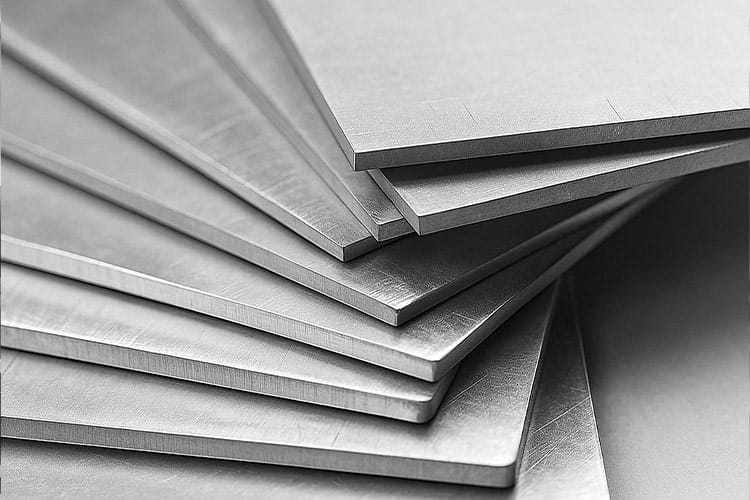
- Plate
- Sheet
- Bar
- Rod
- Wire
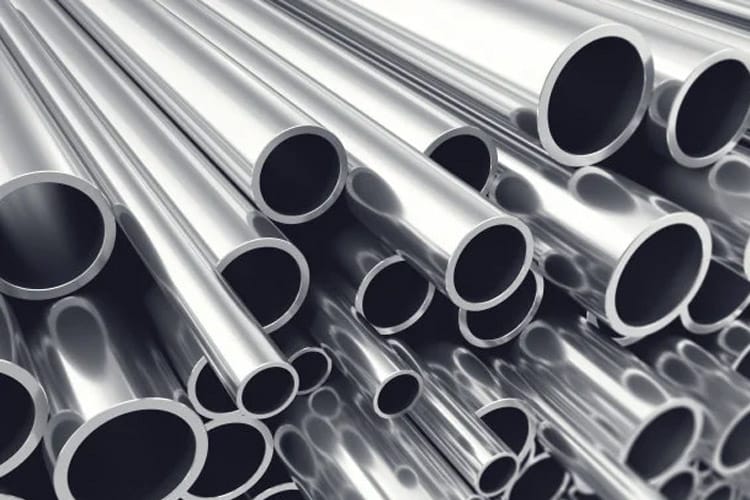
- Tube
- Pipe
- Billet
- Forging
- Machined component
The required product form depends on the final geometry and manufacturing process.
For example, a flat structural component may begin as titanium plate, while a fastener may be manufactured from bar or wire. A forged component may require a billet or suitable forging stock before subsequent machining.
Xinfeng Dingyuan supplies titanium plates and sheets, bars and rods, wire, tubes, and other titanium material forms for different industrial requirements. Titanium Materials
Titanium Material Selection for Medical Applications
Medical applications require a different level of material control.
The material must be selected according to the intended medical application, applicable standards, mechanical requirements, manufacturing process, and required documentation.
Titanium and titanium alloys are used for various medical and orthopedic components, including bone plates, wires, screws, and other implant-related products.
For load-bearing medical applications, Ti-6Al-4V ELI Grade 23 may be specified when its material properties and applicable standard match the device requirements.
For example, Xinfeng Dingyuan provides medical titanium materials and components including medical titanium discs, titanium Kirschner wires, and titanium bone plates.
The important point is that medical-grade material should not be selected simply because a titanium grade is strong or corrosion resistant. The applicable medical specification and finished-device requirements must also be considered.
Titanium Material Selection for Aerospace Applications
Aerospace components often require a combination of strength, low weight, fatigue performance, corrosion resistance, and consistent manufacturing quality.
Ti-6Al-4V is widely used in aerospace applications because it provides a useful balance of strength and weight.
However, aerospace material selection is specification-driven. Depending on the component, designers may need to consider alloy type, heat treatment, product form, mechanical properties, dimensional requirements, inspection, and applicable aerospace specifications.
This is why aerospace buyers should provide a complete material specification instead of simply requesting “Grade 5 titanium.”
The same principle applies to other high-performance applications where certification and traceability are important.
Titanium Material Selection for Marine and Chemical Applications
Marine and chemical-processing components often place greater emphasis on corrosion resistance than maximum tensile strength.
For these applications, commercially pure titanium grades can be highly relevant.
Grade 2 is commonly considered when a combination of corrosion resistance, availability, and moderate strength is required.
Titanium can be used in marine and chemical equipment such as:
- Heat exchangers
- Piping systems
- Pipe fittings
- Tanks
- Pumps
- Fasteners
- Desalination equipment
- Chemical processing components
For titanium pipe and tube products, the required material specification and product dimensions should be established before purchasing. ASTM B861, for example, covers seamless titanium and titanium alloy pipe for corrosion-resistant and elevated-temperature service.
Consider Machinability and Part Complexity
The strongest material is not necessarily the most economical choice for a complex machined part.
Titanium machining can require lower cutting speeds, effective cooling, appropriate tooling, and careful chip management. High-strength alloys can be more demanding to machine than commercially pure grades.
For this reason, material selection should consider the entire manufacturing process.
A component with complex internal features, tight tolerances, or a high material-removal ratio may have significantly different manufacturing economics from a simple titanium plate.
For custom parts, it can be useful to discuss the drawing with the manufacturer before finalizing the material specification.
The supplier may be able to identify a suitable combination of material grade, stock size, forging method, machining sequence, and finishing process.
Don’t Select Titanium Based on Material Price Alone
Titanium generally costs more than many conventional engineering metals, so material price naturally matters.
However, purchasing decisions should consider total component cost rather than raw material price alone.
The total cost can include:
Material + forming + machining + finishing + inspection + testing + certification + packaging
A less expensive material may require more processing. Conversely, a more expensive grade may be justified if it reduces manufacturing steps or provides properties that cannot be achieved with a lower-cost material.
For custom titanium parts, machining time and material utilization can have a significant effect on the final price.
This is particularly important when comparing quotations from different suppliers.
Make sure the quotations are based on the same:
- Titanium grade
- Product form
- Dimensions
- Tolerances
- Quantity
- Surface finish
- Testing requirements
- Certification requirements
Otherwise, two prices may appear different simply because the specifications are different.
Availability Should Be Part of the Selection Process
A technically suitable titanium grade is not always the easiest grade to source.
Common materials such as Grade 2 and Grade 5 are generally available in a wide range of product forms, while specialized alloys or non-standard dimensions may require additional production time.
Availability can therefore affect:
- Lead time
- Minimum order quantity
- Material cost
- Production scheduling
- Replacement sourcing
For a long-term production project, it is worth confirming material availability before locking the specification into the design.
If a specialized alloy is technically required, discuss the supply situation with the titanium manufacturer early in the project.
A Practical Titanium Material Selection Checklist
Before sending an inquiry to a titanium supplier, prepare as much of the following information as possible:
| Information | Why It Matters |
|---|---|
| Application | Helps identify suitable material families |
| Titanium grade | Defines required material properties |
| Product form | Determines stock and manufacturing route |
| Dimensions | Affects material availability and production |
| Mechanical requirements | Determines whether the selected grade is sufficient |
| Operating temperature | Helps evaluate temperature-related performance |
| Corrosion environment | Important for grade selection |
| Manufacturing process | Affects machinability, forging, forming, or welding |
| Quantity | Influences production planning and pricing |
| Tolerances | Determines machining and inspection requirements |
| Surface finish | Affects secondary processing |
| Applicable standard | Defines material and testing requirements |
| Certification | Important for regulated or demanding applications |
| Drawing or sample | Helps evaluate the actual component |
Providing this information early can make the quotation process much more accurate.
A Simple Decision Process for Choosing Titanium Material
If you are starting from an engineering requirement rather than a specific grade, use this sequence:
Step 1: Define the application
Identify where and how the component will be used.
Step 2: Define the environment
Record exposure to seawater, chemicals, body fluids, humidity, temperature, and other relevant conditions.
Step 3: Define mechanical requirements
Determine the required strength, ductility, fatigue performance, hardness, and weight requirements.
Step 4: Select a suitable titanium grade
Compare commercially pure titanium and titanium alloys based on the actual requirements.
Step 5: Select the product form
Decide whether the project needs plate, sheet, bar, rod, wire, tube, billet, forging, or a finished machined part.
Step 6: Confirm the manufacturing process
Consider forging, CNC machining, bending, welding, cutting, grinding, or other processing requirements.
Step 7: Confirm standards and documentation
Specify ASTM, AMS, ISO, medical, aerospace, or customer-specific requirements where applicable.
Step 8: Review total cost and availability
Compare not only the material price but also processing, inspection, certification, lead time, and material availability.
This approach reduces the risk of over-specifying the material or discovering manufacturing problems after production has started.
When Should You Consider Custom Titanium Manufacturing?
Standard titanium stock is suitable for many applications, but custom manufacturing becomes useful when the component requires specific dimensions, geometry, tolerances, or surface conditions.
Custom titanium parts may be produced from:
- Engineering drawings
- Samples
- CAD files
- Technical specifications
Depending on the component, manufacturing may involve forging followed by CNC machining, or machining directly from titanium bar, plate, billet, or other stock.
Xinfeng Dingyuan provides titanium processing and forging as well as custom titanium components for applications that require specific shapes and dimensions.
For custom orders, providing the complete drawing and material requirements at the quotation stage allows the manufacturer to evaluate the most appropriate production route.
Final Thoughts
Choosing the right titanium material requires more than comparing a list of grades.
The most suitable material is determined by the combination of application, mechanical requirements, corrosion environment, operating temperature, product form, manufacturing process, standards, availability, and total cost.
For many industrial applications, Grade 2 may provide a practical balance when corrosion resistance is more important than maximum strength. Grade 5 Ti-6Al-4V is often considered when higher strength and strength-to-weight performance are required. Medical applications may require specific grades such as Grade 23 together with the appropriate medical specification and manufacturing controls.
The key is to select the material based on the finished component’s actual requirements rather than choosing a grade simply because it is widely used.
When requesting titanium materials or custom titanium components, a complete technical specification, drawing, or sample can help the manufacturer recommend the right material form and manufacturing process for the project.
FAQ
What is the best titanium material for industrial applications?
There is no single best titanium material for every industrial application. Grade 2 is commonly considered for corrosion-resistant applications, while Grade 5 is often selected when higher strength is required.
How do I choose between Grade 2 and Grade 5 titanium?
Start with the application’s strength requirements. Grade 2 is commercially pure titanium with strong corrosion resistance and good formability, while Grade 5 Ti-6Al-4V provides substantially higher strength and strength-to-weight performance.
Does titanium grade affect machining?
Yes. Different titanium grades have different machining characteristics. High-strength alloys such as Ti-6Al-4V generally require more demanding machining conditions than commercially pure titanium.
Which titanium grade is used for medical implants?
Specific medical applications may use commercially pure titanium or Ti-6Al-4V ELI Grade 23, depending on the device design and applicable medical specifications.
Should I choose titanium based on price?
No. Raw material price is only one part of the total cost. Machining, forging, finishing, inspection, certification, material utilization, and lead time should also be considered.
What information should I send to a titanium supplier?
Provide the application, required grade if known, dimensions, quantity, drawing or sample, tolerances, surface requirements, applicable standards, testing requirements, and operating environment.