Table of Contents
A titanium sample order helps buyers confirm material, machining, documentation, and packaging before committing to repeat production. The sample should not be treated as a loose reference part. It should prove whether the supplier understands the drawing, purchase specification, inspection standard, and real application constraints.
This guide is written for overseas buyers sourcing titanium bar stock, sheet or plate material, CNC machined titanium parts, fasteners, and other custom titanium components. It explains what to check before approving a titanium sample order for larger production.
Why Titanium Sample Orders Matter Before Repeat Production
A titanium sample order reduces risk when the buyer is testing a new grade, new supplier, new drawing, or new packaging requirement. For a simple stock item, the sample may confirm grade, size, certificate format, and surface condition. For a custom machined part, the sample should also confirm tool path quality, burr control, threads, fit, and drawing interpretation.
The purpose is not to create unnecessary delay. The purpose is to avoid scaling a small misunderstanding into a full production problem. If the buyer approves a sample without checking the right details, the repeat order may reproduce the same weakness at a larger quantity.
Define What the Sample Must Prove
Before placing a titanium sample order, decide what the sample must prove. A sample can answer different questions: Can the supplier source the correct titanium grade? Can the factory hold the required tolerance? Is the surface acceptable? Does the part assemble correctly? Does the document package meet the buyer’s receiving process?
For custom parts, the drawing is the starting point, but it is not the whole purchase requirement. Include material grade, quantity, application notes, tolerance priorities, finishing expectations, packaging requirements, and any inspection documents. XFDY’s guide on how to specify custom titanium parts gives buyers a structured way to communicate those details.
Documents to Request With a Titanium Sample Order
The sample should arrive with documents that make the material and process traceable. For titanium bar or billet material, ASTM’s ASTM B348 page describes the specification scope for titanium and titanium alloy bars and billets. For sheet and plate samples, buyers often refer to ASTM B265 through official standards channels when that specification is required.
Do not ask for documents in vague terms. State whether you need a material certificate, chemical composition reference, heat or lot number, dimensional inspection report, drawing revision, surface finish note, or packing list. If the sample is for a regulated or highly controlled application, confirm document requirements before production rather than after shipment.

Evaluate Machining, Surface, and Tolerance
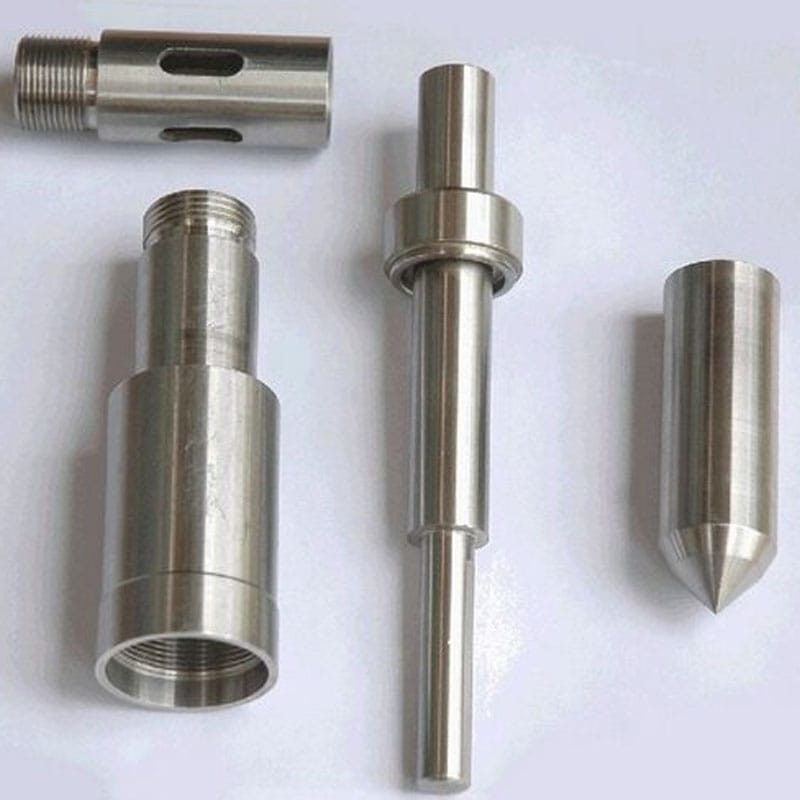
For CNC machined titanium samples, inspection should focus on the features that determine function. Measure critical dimensions, thread fit, hole position, flatness, edge condition, and any contact surfaces. Do not rely only on overall appearance. A part can look clean but still fail a tolerance that matters in assembly.
Surface requirements should also be practical. Some applications accept normal machining marks, while others require tighter visual or functional control. If a scratch, burr, discoloration, or tool mark is unacceptable, define where it is unacceptable and why. This helps the supplier separate cosmetic preferences from functional requirements.
For drawing-based work, ASME describes its Y14.5 dimensioning and tolerancing standard as an authoritative guideline for geometric dimensioning and tolerancing. Buyers do not need to cite that standard in every order, but drawings should communicate tolerances clearly enough for inspection.
Check Material Grade and Traceability
Material verification begins with the purchase requirement. Compare the sample label, packing information, and material certificate with the requested grade. If the order requires Grade 2, Grade 5, or another titanium alloy, the documents and package labels should not leave room for confusion.
Traceability is especially important when samples are used to approve repeat production. Ask whether the repeat order will use the same material route, equivalent certified material, or a newly sourced heat. If the repeat order uses different material, the buyer may need updated certificates and, in critical applications, additional verification.
For general element reference, NIST’s Chemistry WebBook page for titanium identifies titanium as Ti with molecular weight 47.867. That fact does not verify a commercial grade by itself, but it reinforces why grade-level documentation is necessary rather than relying on a generic material name.
What Affects Minimum Order Quantity
Minimum order quantity is not only a sales rule. For titanium samples and repeat orders, MOQ can be affected by stock availability, bar or plate size, cutting loss, machining setup, inspection time, packaging, and whether the product is standard material or a custom component.
For example, a very small machined part may still require setup time, tool preparation, programming, and inspection. A cut-to-size titanium bar sample may depend on the stock length available and the remaining usable material. Buyers should ask the supplier to explain the MOQ driver rather than assuming every item can be made one piece at a time.
If your purchasing team is still defining the order scope, XFDY’s article on titanium purchase specification helps clarify grade, form, tolerance, inspection, and document requirements before requesting a quote.
Turn Sample Feedback Into Repeat Order Readiness
A titanium sample order becomes valuable when the buyer turns feedback into production instructions. If a hole position is acceptable but the edge needs improvement, say that directly. If the sample is dimensionally correct but packaging caused surface marks, approve the machining condition while revising the packing instruction.
Feedback should be written, measurable where possible, and linked to the drawing or purchase order. Avoid approving the sample with only a general statement such as looks good. That gives the supplier little guidance for repeat production and can create disagreement later.

Sample Order Evaluation Checklist
Use the checklist below before moving from sample order to repeat production. It is designed for titanium stock materials and custom titanium parts, but buyers should adapt it to the product, application, and document requirements.
| Evaluation area | What to check | Buyer action before approval | Why it matters |
|---|---|---|---|
| Material | Grade, heat or lot number, certificate reference | Compare documents with RFQ and PO | Confirms the sample matches the intended titanium requirement |
| Dimensions | Critical sizes, tolerances, hole positions, thread fit | Inspect against the drawing and note deviations clearly | Prevents repeat production based on an ambiguous sample |
| Surface | Machining marks, scratches, burrs, edge condition | Define acceptable and unacceptable visual conditions | Aligns supplier inspection with real application needs |
| Packaging | Part separation, labels, drawing revision, quantity per carton | Confirm how repeat orders should be packed | Reduces receiving errors when order volume increases |
If the sample meets the critical requirements, send approval together with any packaging, labeling, and repeat order changes. If the sample needs correction, identify whether the issue is material, machining, surface, documentation, or communication. For drawing-based components, XFDY’s article on custom titanium alloy components explains how drawings move into production steps.
When you are ready to evaluate a new titanium sample order, send XFDY the drawing, grade, quantity, critical dimensions, surface expectations, and document requirements through the contact page. The inquiry should focus on what the sample must prove before repeat production.
Conclusion
A titanium sample order should confirm more than whether a supplier can ship a small quantity. It should verify material grade, drawing interpretation, machining quality, surface condition, document traceability, packaging, and readiness for repeat production. Clear sample criteria give both buyer and supplier a better basis for approval, correction, or quotation of the next order.