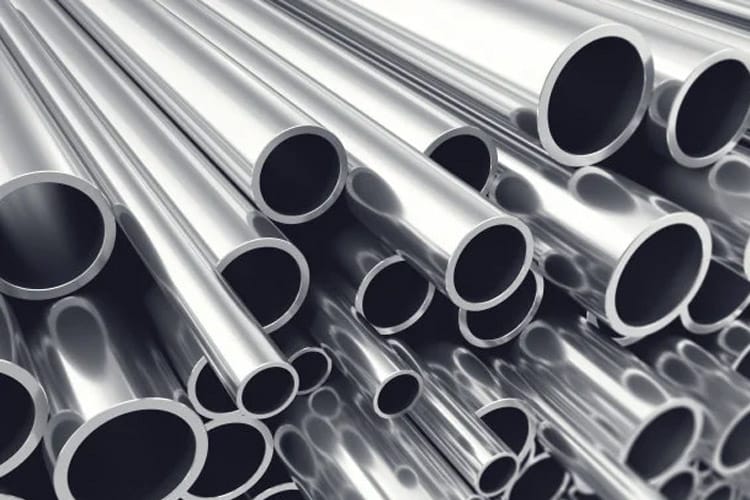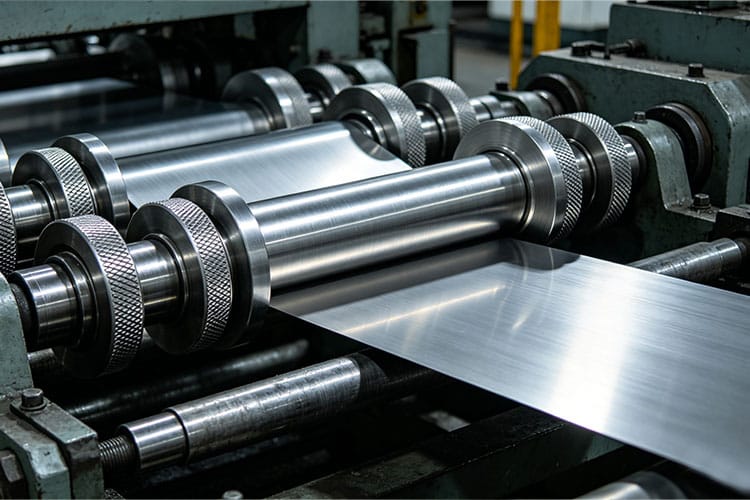
A drawing arrives with a simple material note: titanium plate.
That sounds straightforward until purchasing starts asking questions. Which grade? Does the part need Grade 2 for corrosion resistance or Grade 5 for strength? Is Grade 7 necessary because the equipment will handle aggressive chemicals? And if the finished component is medical-related, is Grade 23 actually the material the drawing requires?
These are not small details.
The grade you choose affects how the plate behaves during cutting, forming, welding and machining. It also affects material cost, documentation requirements and, most importantly, how the finished part performs in service.
For most industrial projects, four grades come up repeatedly: Grade 2, Grade 5, Grade 7 and Grade 23.
They are all titanium, but they are not interchangeable.
This guide looks at the differences from the point of view that matters most when you are actually buying material or preparing a component for production.
Table of Contents
Start With the Part, Not the Grade Number
It is tempting to open a titanium datasheet and compare tensile strength first. In practice, that is often the wrong place to start.
Start with what the finished part has to do.
A plate that will become a chemical tank wall has very different priorities from one that will be machined into a high-load structural component. A seawater handling system may care more about corrosion resistance than maximum strength, while a precision aerospace bracket may put strength-to-weight ratio at the top of the list.
Before choosing a titanium plate, answer a few practical questions:
- What will the part be exposed to?
- Does it carry significant mechanical load?
- Will the material be bent, welded or deeply formed?
- Will most of the plate be removed by CNC machining?
- Is the surface visible in the finished product?
- Does the drawing call out a particular ASTM standard?
- Are material certificates or batch traceability required?
Once those points are clear, the grade decision usually becomes much easier.
This is also how we approach material questions at Shanxi Xinfeng Dingyuan Precision Manufacturing Co., Ltd. When a customer sends us a titanium plate inquiry together with a drawing or application description, the drawing often tells us more than a grade name alone. The finished geometry, machining allowance and service environment all matter when deciding what material form should go into production.
Grade 2 Titanium Plate: Often the Most Practical Starting Point
For general industrial use, Grade 2 titanium plate is one of the first materials worth considering.
Grade 2 is commercially pure titanium. It is not the strongest titanium available, and that is precisely why comparing materials only by strength can be misleading.
Its real appeal is balance.
Grade 2 offers good corrosion resistance, useful ductility and relatively good forming and welding characteristics. That combination is why it appears so often in chemical processing, marine systems and fabricated titanium equipment.
Typical uses include:
- Chemical tanks and vessels
- Heat exchanger components
- Marine equipment
- Seawater systems
- Electrochemical equipment
- Industrial covers and housings
- Fabricated titanium structures
- Corrosion-resistant machined parts
If you are replacing stainless steel or another material because corrosion has become a maintenance problem, Grade 2 is often one of the grades engineers investigate first.
Where Grade 2 Works Particularly Well
Think about a fabricated equipment panel that needs to be cut, bent and welded before installation.
Maximum tensile strength may not be the limiting factor. Fabrication behavior and corrosion resistance may be much more important.
In that situation, Grade 2 can make more sense than jumping directly to Grade 5.
The same logic applies to many marine and chemical applications. If Grade 2 already provides the corrosion performance and strength the design needs, specifying a more expensive alloy may simply make the project harder to manufacture without adding a meaningful service benefit.
For customers sourcing titanium sheet and plate for these applications, Xinfeng Dingyuan can work from the required grade, dimensions, surface condition and downstream processing needs rather than treating the material as an off-the-shelf commodity.
That becomes especially useful when the plate is only the starting point for a custom component.
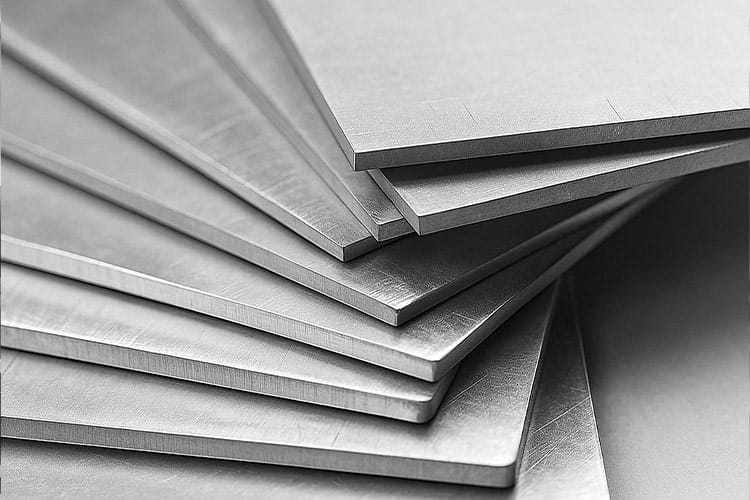
Grade 5 Titanium Plate: When Strength Really Matters
Grade 5 titanium plate, also known as Ti-6Al-4V, is a very different material.
This is the grade people often think of when they hear about titanium’s high strength-to-weight ratio.
Grade 5 contains aluminum and vanadium and offers significantly higher mechanical strength than commercially pure Grade 2. That makes it attractive for components where loads are higher and reducing weight matters.
You will commonly see Grade 5 used in:
- Aerospace components
- Structural parts
- Precision machine components
- High-performance equipment
- Automotive and motorsport parts
- Load-bearing brackets
- Custom CNC components
- Energy equipment
But there is a catch.
Stronger Does Not Automatically Mean Better
If a buyer asks for Grade 5 simply because it sounds more advanced, the project may end up paying for properties it does not need.
Grade 5 is generally more demanding to form and machine than commercially pure titanium.
Anyone who has spent time machining Ti-6Al-4V knows that the job is less about simply “cutting a hard metal” and more about managing heat, tool engagement, rigidity and chip evacuation. Titanium does not conduct heat away from the cutting zone as readily as many common engineering metals, so machining strategy matters.
That makes the original plate size important too.
If a Grade 5 titanium plate will eventually become a heavily machined part, buying the finished nominal dimensions is rarely enough. The blank needs suitable machining allowance, and the starting thickness should make sense for the final geometry.
This is one reason Xinfeng Dingyuan’s plate and custom manufacturing work often overlap. Some buyers only need raw titanium material. Others are really looking for a titanium blank or finished custom component made from plate.
Sending the final drawing early allows the manufacturing route to be considered before material is cut.
Grade 7 Titanium Plate: Chosen for the Environment, Not the Strength
Grade 7 is easy to misunderstand because its main advantage is not obvious from the grade number.
Grade 7 titanium plate is based on commercially pure titanium with a small palladium addition. That addition is used primarily to improve performance in certain aggressive corrosive environments.
So the question is not:
“Is Grade 7 stronger than Grade 2?”
The more useful question is:
“Does the service environment justify Grade 7 instead of Grade 2?”
Grade 7 is commonly considered for equipment used in:
- Chemical processing
- Acid service
- Chloride-containing environments
- Heat exchangers
- Process equipment
- Chemical reactors
- Corrosive piping systems
If Grade 2 already performs well in the actual medium, Grade 7 may be unnecessary.
Where conditions become more aggressive, however, the additional corrosion resistance can become valuable.
Give the Supplier the Chemistry, Not Just the Industry
“Chemical plant” is not enough information for good material selection.
Neither is “corrosive environment.”
Two components installed in the same facility may see completely different conditions.
When requesting a Grade 2 or Grade 7 titanium plate, it helps to include:
- The process medium
- Concentration
- Operating temperature
- Pressure
- Chloride content where relevant
- Cleaning chemicals
- Continuous or intermittent exposure
- Expected service conditions
This gives the material supplier something concrete to work with.
It also avoids paying for Grade 7 simply because someone copied the grade from another project with different operating conditions.
Grade 23 Titanium Plate: Where Material Control Becomes More Important
Grade 23 titanium, commonly referred to as Ti-6Al-4V ELI, is closely related to Grade 5.
ELI means Extra Low Interstitial.
For a buyer, the important point is that Grade 23 is not simply “premium Grade 5.” It is used where tighter control of certain material characteristics is required.
It is commonly associated with:
- Medical components
- Implant-related manufacturing
- Aerospace parts
- Critical precision components
- High-performance engineered parts
This is also where purchasing specifications need to become more precise.
If a component is intended for medical use, writing “Grade 23 titanium plate” on an email may not be enough. The applicable material standard, traceability requirements, inspection records and final application all need to be considered.
Xinfeng Dingyuan supplies titanium materials alongside medical titanium and precision custom components, so medical-related inquiries are best handled with the application and drawing included from the beginning.
That makes it easier to separate a general Grade 23 material request from a project that has additional medical-material or documentation requirements.
Grade 2 vs Grade 5 vs Grade 7 vs Grade 23 at a Glance
If you are narrowing down the options, this is a useful first comparison.
| Grade | Material Type | Main Reason to Choose It | Typical Applications |
|---|---|---|---|
| Grade 2 | Commercially pure titanium | Corrosion resistance, forming and welding | Chemical equipment, marine systems, fabricated parts |
| Grade 5 | Ti-6Al-4V | High strength-to-weight ratio | Aerospace, machinery, structural and CNC parts |
| Grade 7 | Palladium-alloyed CP titanium | Enhanced corrosion resistance | Aggressive chemical and process environments |
| Grade 23 | Ti-6Al-4V ELI | Controlled high-performance material | Medical-related, aerospace and precision components |
The table is useful for orientation, but it should not replace the drawing or service conditions.
For example, saying “marine application” does not automatically mean Grade 2, and saying “high-end equipment” does not automatically mean Grade 5.
The actual load, environment and manufacturing route still decide the material.
ASTM B265: What Buyers Should Actually Put on the RFQ
For titanium plate and sheet, ASTM B265 is one of the standards buyers commonly encounter.
The important thing to understand is that ASTM B265 is not a grade.
An inquiry that says only:
ASTM B265 titanium plate
is still incomplete.
You need to state the grade as well.
A much more useful purchasing description would look like:
ASTM B265 Grade 2 titanium plate, required thickness, width, length, quantity and surface condition.
Depending on the project, the RFQ may also need:
- Thickness tolerance
- Flatness requirement
- Surface condition
- Cutting allowance
- Material test certificate
- Chemical composition results
- Mechanical property records
- Heat or batch identification
- Additional inspection requirements
This may seem detailed for a first inquiry, but those details are what separate a meaningful titanium plate quotation from a generic price per kilogram.
If you are still at the drawing stage, you do not necessarily need to solve every item yourself. A drawing plus the intended application is often enough to start a productive technical discussion with the supplier.
Plate or Sheet? The Name Matters Less Than the Actual Dimension
In everyday sourcing, people often use “titanium plate” and “titanium sheet” loosely.
That is understandable, especially at the early quotation stage.
What matters more is giving the supplier the actual thickness and dimensions.
A thinner titanium sheet may be intended for bending, covers or lightweight fabricated structures. A thicker titanium plate may be used as a machining blank, structural component or equipment plate.
The manufacturing route changes with thickness.
So instead of spending too much time debating whether something should be called plate or sheet, make sure the inquiry contains:
Grade + standard + thickness + width + length + quantity + final use.
That gives the supplier enough information to understand what you actually need.
For projects where standard rectangular material is not the end product, Xinfeng Dingyuan can also review drawing-based requirements for custom titanium blocks, forgings and precision components. In some cases, starting from a different titanium product form can reduce unnecessary machining or material waste compared with beginning with a very thick plate.
If the Plate Will Be Machined, Buy for the Finished Part
This is one of the most practical points in the whole article.
Suppose your finished component is 18 mm thick.
Ordering an 18 mm titanium plate because the drawing says 18 mm may create an immediate problem if both surfaces still need machining.
You need stock allowance.
How much depends on the part, the starting material, flatness, the machining route and the final tolerance.
The same applies to outside dimensions.
If almost the entire perimeter will be machined, the purchasing size should reflect that.
For CNC components, tell the supplier:
- Finished part dimensions
- Required tolerances
- Critical surfaces
- Hole or thread features
- Surface finish
- Quantity
- Whether you need raw blanks or finished parts
This is where a titanium manufacturer that also understands machining can be more useful than buying material and processing separately.
Xinfeng Dingyuan works with titanium plates, bars, forgings and custom precision components. If your titanium plate is ultimately going into a machined part, sending the drawing with the material request allows the team to review the requirement as a finished manufacturing project rather than simply quote a rectangle of metal.
For many industrial buyers, that is the more useful conversation.
Surface Condition Can Change the Way You Buy Titanium Plate
A rough blank and a visible finished panel should not be purchased in exactly the same way.
If the entire surface will disappear during machining, small cosmetic marks may have little effect on the finished component.
If the plate will remain visible, be polished or form part of finished equipment, surface condition becomes far more important.
Before ordering, consider whether you need:
- Mill surface
- Ground surface
- Machined finish
- Polished finish
- Surface protection during transport
- Special packaging to reduce scratching
A vague requirement such as “good surface” is difficult to inspect objectively.
If surface appearance matters, define what is acceptable before production.
The same applies to flatness.
For a large fabricated panel, flatness can affect fit-up. For a precision machining blank, it can affect clamping and machining allowance.
These details are not separate from the material choice. They are part of buying the right titanium plate.
Which Titanium Plate Grade Fits Common Applications?
There is no universal chart that can make the decision for every project, but a few patterns are useful.
Chemical Processing Equipment
Start by looking at Grade 2.
If the medium and temperature create more demanding corrosion conditions, Grade 7 may deserve consideration.
Do not make the decision without reviewing the actual chemical environment.
Marine and Seawater Equipment
Grade 2 is widely considered where corrosion resistance in marine service is a major requirement.
If the component is also highly loaded, strength requirements may point toward another grade or design approach.
Precision CNC Components
Grade 5 is common where mechanical strength is important.
If the component does not require that level of strength, commercially pure titanium may still be worth considering.
The drawing should drive the decision.
Medical-Related Components
Grade 23 frequently appears in medical-related applications, but the correct specification depends on the actual component and applicable material requirements.
Grade alone should never replace the required standard and documentation.
General Fabricated Equipment
Grade 2 is often the most practical material to evaluate first because of its combination of corrosion resistance and fabrication characteristics.
Again, “first” does not mean “always.”
A Better Way to Ask for a Titanium Plate Quote
A good inquiry does not need to be long.
It just needs to answer the questions that affect production.
For example:
We need Grade 5 titanium plate for CNC-machined equipment components.
Required stock size: 25 × 300 × 500 mm, 20 pieces.
Final drawing attached.
Please quote material with certificate and advise whether the requested blank size provides enough machining allowance.
That is far more useful than:
Please send your best price for titanium plate.
For a fabricated chemical component, the inquiry might instead include the chemical medium, plate thickness, welding requirement and required grade.
When Xinfeng Dingyuan receives a drawing-based inquiry, information like this allows the team to look at the plate as part of the finished product—not just as raw material.
That can also open up other options.
If the part is better produced from a titanium block, bar, forging or custom-shaped blank, the starting material can be discussed before unnecessary processing is added to the job.
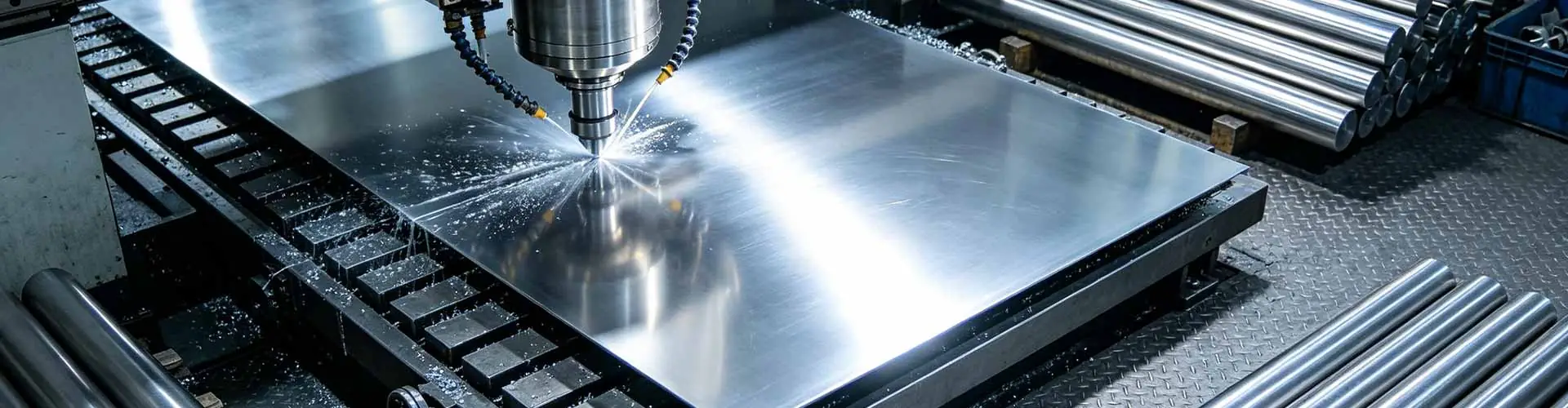
Common Mistakes We See in Titanium Plate Sourcing
Choosing Grade 5 Because It Sounds Better
Grade 5 is stronger. That does not make it the right answer for every project.
If corrosion resistance and fabrication are the main requirements, Grade 2 may be more practical.
Requesting Grade 7 Without Describing the Medium
Grade 7 is normally selected for a reason.
Share the actual chemical and temperature conditions so the material decision can be checked against the application.
Treating Grade 23 as a Complete Medical Specification
It is not.
Medical-related components can have additional material, documentation and manufacturing requirements.
Buying Exact Finished Dimensions for a Machined Part
If material still needs to be removed, the starting blank needs machining allowance.
Send the drawing before ordering stock.
Comparing Suppliers Only on Price per Kilogram
Two quotations may not include the same surface condition, tolerance, testing, cutting, documentation or processing.
Compare the complete supply requirement, not just the unit material price.
Questions Buyers Often Ask
Is Grade 5 titanium plate better than Grade 2?
Not in every application.
Grade 5 is considerably stronger, while Grade 2 is often preferred where corrosion resistance, formability and fabrication are more important. The right grade depends on what the finished component needs to do.
What grade of titanium plate is commonly used for chemical equipment?
Grade 2 is widely considered for chemical processing equipment. More aggressive environments may lead engineers to consider Grade 7. The actual medium, concentration and temperature should be reviewed before making the final choice.
Is Grade 23 the same as Grade 5 titanium?
Both use the Ti-6Al-4V alloy system, but Grade 23 is the ELI version with tighter control of interstitial elements. Grade 23 is frequently used for applications with more specific material-performance requirements.
Can titanium plate be supplied for CNC machining?
Yes. Titanium plate is commonly used as stock for CNC-machined components. The required blank dimensions should include appropriate machining allowance.
If you already have a finished-part drawing, it is usually better to share it with the material or machining supplier before ordering the plate.
What information should I send when asking for a titanium plate quotation?
At minimum, provide the grade, standard, thickness, width, length and quantity.
If possible, also include tolerance, surface requirements, inspection documents, application and drawing. The more the supplier understands about the finished component, the more useful the quotation will be.
The Right Titanium Plate Is the One That Fits the Whole Manufacturing Process
The difference between Grade 2, Grade 5, Grade 7 and Grade 23 becomes much easier to understand once you stop treating titanium plate as an isolated raw material.
Grade 2 is often a strong choice for corrosion-resistant industrial fabrication. Grade 5 brings significantly higher strength for structural and machined components. Grade 7 is considered when the corrosion environment becomes more demanding. Grade 23 is used where the Ti-6Al-4V ELI material specification is required.
But the grade is only the beginning.
Thickness, flatness, machining allowance, surface condition, inspection documents and the finished geometry all matter.
If you are currently sourcing titanium plate for an industrial component, you can send your grade, dimensions and quantity to Shanxi Xinfeng Dingyuan Precision Manufacturing Co., Ltd.
And if the plate will eventually become a machined or custom-shaped part, send the drawing as well.
Alongside titanium plates and sheets, we work with titanium bars, wires, forgings, pipe fittings, standard titanium parts and custom precision titanium components. This allows us to look at the requirement from both sides: the material you need to start with and the component you actually need at the end.
For many projects, that is the difference between simply buying titanium and buying material that is ready for the next step in production.