
Table of Contents
- Start with the Intended Component Function
- Choose the Correct Titanium Material
- Control Small Features and Tolerances
- Specify Surface Finish and Edge Requirements
- Plan Inspection Before Production
- What Buyers Should Provide
Medical titanium components require careful communication between design, purchasing, and manufacturing teams. Products such as titanium plates, screws, wires, discs, and instrument parts often have small features, strict dimensional requirements, and documentation needs. A clear specification helps reduce manufacturing uncertainty before production begins.
This article discusses practical considerations for medical titanium components from a manufacturing and procurement point of view. It does not provide clinical advice. Instead, it focuses on material selection, machining, surface condition, inspection, and quotation details.

Start with the Intended Component Function
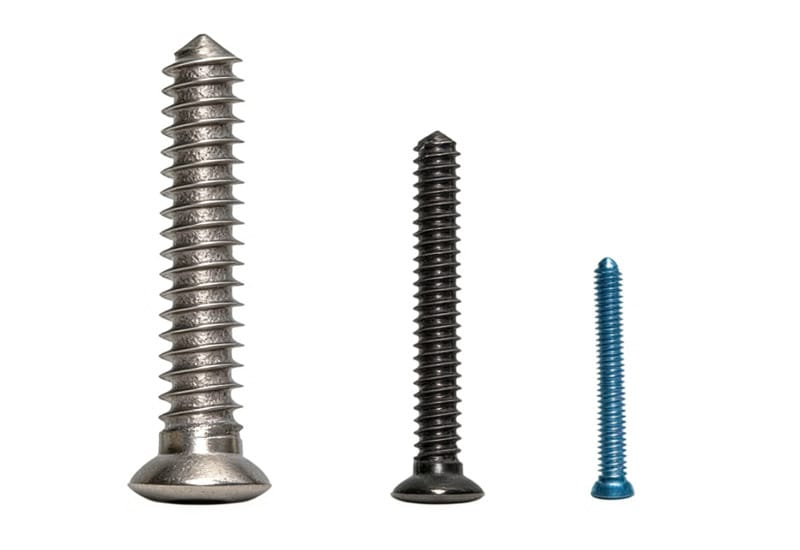
The shape and function of medical titanium components should be defined before discussing production. A bone plate, screw, wire, disc, or instrument part may require very different material thickness, hole position, thread profile, surface finish, and inspection method. The supplier needs to know which surfaces are functional and which are non-critical.
If a component is related to a regulated medical product, the buyer should provide the applicable drawing, standard, and documentation requirement. Medical titanium components should not be treated as generic machined parts when traceability and dimensional control are important.
Choose the Correct Titanium Material
Titanium is widely used in medical-related manufacturing because of its corrosion resistance, strength-to-weight ratio, and material stability. Depending on the application, buyers may specify commercially pure titanium or titanium alloy. The final selection should follow the project drawing and applicable material requirement.
For general background, the overview of titanium biocompatibility explains why titanium is often discussed in medical material contexts. In actual procurement, medical titanium components still need confirmed grade, certificate, and inspection criteria.
Control Small Features and Tolerances
Medical titanium components often include small holes, slots, threads, thin sections, curves, or polished contact areas. These features require careful machining and inspection. Overly loose tolerances may create fit problems, while unnecessarily tight tolerances can increase cost and production time.
Drawings should identify critical dimensions clearly. For plates and screws, hole position, countersink shape, thread quality, and edge condition may be key. For wires or discs, diameter, flatness, surface condition, and burr control may be more important.
Specify Surface Finish and Edge Requirements
Surface finish is a central part of medical titanium components. Machined, polished, brushed, or other requested surfaces should be described on the drawing or purchase document. Burrs, sharp edges, scratches, and contamination should be controlled according to the component function.
The supplier should also know how the parts will be packed and handled. Precision surfaces can be damaged during transport if packaging is not planned. Separating parts and using protective packing can reduce scratches before incoming inspection.
| Decision Area | What to Check | Why It Matters |
|---|---|---|
| Material grade | Pure titanium or titanium alloy as specified | Grade affects strength, formability, and documentation |
| Geometry | Plate shape, screw thread, wire diameter, holes | Controls fit and manufacturing method |
| Surface condition | Machined, polished, cleaned, or custom finish | Important for handling and functional surfaces |
| Traceability | Batch, certificate, inspection records | Supports controlled purchasing and review |
Plan Inspection Before Production
Inspection planning should happen before production starts. Medical titanium components may require dimensional reports, material certificates, visual inspection, thread checks, and batch identification. The buyer should specify what documents are needed with shipment.
If first article inspection is required, make that clear in the order. Early sample review helps confirm that medical titanium components match the drawing before larger batch production begins.
What Buyers Should Provide
A complete inquiry should include 2D drawings, 3D models if available, material grade, quantity, tolerance notes, surface finish, inspection documents, packaging requirements, and intended use category. If the part is custom, samples or photos can help explain details that drawings may miss.
Clear communication improves manufacturing accuracy. For medical titanium components, it is better to clarify every critical requirement early than to correct tooling, machining, or inspection plans after production has started.
Procurement Checklist for Better Results
Before ordering medical titanium components, confirm the drawing revision, material grade, surface condition, and inspection documents. Small changes in hole position, thread profile, edge radius, or plate thickness can affect downstream assembly and should not be left to verbal description.
If samples are available, send photos together with the drawing. Medical titanium components often include curved surfaces or small functional details that are easier to understand visually. The supplier can then review machining method, burr control, and packaging before production.
Documentation should be agreed before shipment. For medical titanium components, batch identification, material certificates, and dimensional reports may be required by the buyer even when the supplier is only producing according to drawings.
For related medical titanium products, review Titanium Cortical Bone Screw and Arc-Shaped Locking Bone Plate for product specifications that match this topic.
Additional Planning Notes
For controlled projects, internal review should happen before purchase documents are sent. Engineering, quality, and purchasing teams should agree on drawing revision, inspection scope, packing method, and acceptance criteria so the supplier receives one clear set of requirements.