Table of Contents
Ordering titanium bar stock by grade and diameter alone leaves an important question unanswered: will the material suit the machining route?
Consider a shaft with a finished outside diameter of 25 mm. Ordering a 25 mm bar may look logical, but it leaves no planned allowance for machining that surface. Going much larger creates a different problem: more material has to be removed before the useful part takes shape.
The purchasing decision starts with the finished drawing, but it should not end there. Workholding, blank preparation and inspection requirements belong in the conversation before the order is released.
What Should You Specify When Ordering Titanium Bar Stock?
Specify the approved grade and material standard, supply condition, stock dimensions and tolerances, surface condition, machining allowance, and required inspection documents. Add cutting, identification and packaging requirements wherever they affect how the material will enter production.
Keep the raw material specification separate from the finished component drawing. A supplier receiving only the latter needs to know whether you are requesting full-length bars, prepared blanks or completed parts. Otherwise, the same drawing can produce offers covering different amounts of work.
When reviewing titanium bars and rods, treat the product category as a starting point. Confirm the particular grade, dimensions, condition and documentation for your order rather than assuming every combination is available.
Confirm the Grade and Material Standard Before Selecting a Diameter
Grade 2 is unalloyed titanium, while Grade 5 is the titanium alloy commonly described as Ti-6Al-4V. They are separate material designations in ASTM B348/B348M, which covers annealed titanium and titanium alloy bars and billets.
For procurement, the practical rule is straightforward: use the material approved for the component. A request for grade 2 titanium bar should not become an order for grade 5 titanium bar simply because the latter is available in a convenient size. Resolve any proposed substitution with the person responsible for the design.
A Grade Name Is Not a Complete Specification
Write the required standard and edition into the purchasing documents, together with the grade and supply condition. Follow the project specification where it names a different material standard; a familiar designation should not be substituted without review.
Also distinguish the material condition from the surface description. “Annealed” and “ground” answer different questions. Ask the supplier to confirm both when both matter to the job.
Titanium Bar Tolerances Should Match the Machining Setup
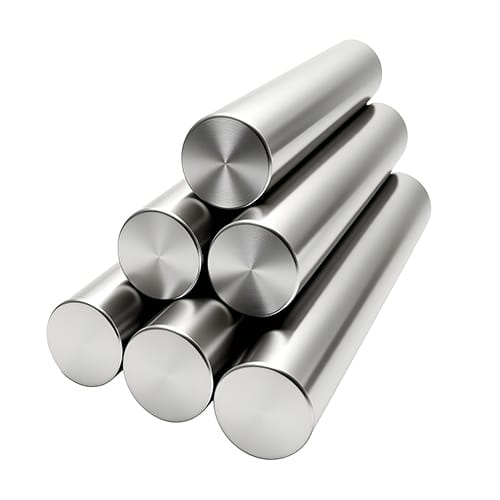
For titanium bar stock, ask the machining team which incoming characteristics need tighter control than the proposed material specification provides. The answer should come from the setup, not from a blanket request for “high precision.”
For a bar-fed operation, agree the acceptable input dimensions and geometry against the equipment requirements. For individually loaded blanks, discuss gripping length, locating surfaces and the amount of material needed for the first operation. These are manufacturing decisions to settle before accepting a stock size.
| Characteristic | What to state in the order | What the machining team should review |
|---|---|---|
| Outside diameter | Nominal size and permitted upper and lower limits | Workholding compatibility and minimum material remaining for machining |
| Cross-sectional form | The applicable form requirements and any additional agreed limits | Whether diameter checks alone adequately assess the intended setup |
| Straightness | Acceptance limit, assessment length and measurement method | How the supplied length will be fed, supported and located |
| Cut length | Blank length, tolerance and end-condition requirements | Facing allowance, gripping length and subsequent cutoff needs |
| Surface condition | Required finishing process and roughness limits where applicable | Which surfaces will be machined and which will remain as supplied |
Keep these characteristics separate. A diameter reading does not establish straightness along the bar. Measurements at several positions can help screen variation, but acceptance should follow the agreed inspection method rather than an improvised check at receiving.
How Much Machining Allowance Does Titanium Bar Need?
There is no single allowance suitable for every titanium bar stock order. Start with the maximum finished dimensions, then have the machining team account for stock variation, surface cleanup and the chosen method of locating the blank.
For a simple concentric round section, the geometric radial allowance is half the difference between the stock diameter and finished diameter.
Illustrative example: suppose a nominal 27.0 mm blank is permitted to measure as little as 26.8 mm, and the maximum finished diameter is 25.0 mm. The simplified radial allowance is:
(26.8 − 25.0) ÷ 2 = 0.9 mm per side.
This is a geometry example, not a recommended allowance or a supplier specification. It assumes a concentric section and does not account for bow, out-of-roundness, surface defects or a shift between the raw material axis and the machining axis.
The important habit is to calculate from the least favorable permitted stock size, not just the nominal diameter. Agree the final blank dimensions only after checking the whole machining route.
More Allowance Is Not Automatically Better
Unnecessary oversize creates extra material-removal work. Equally, reducing stock too aggressively can leave insufficient room for cleanup. Ask the machining team to justify the proposed blank rather than simply rounding the finished diameter up to the next convenient size.
Choose a Surface Condition That Fits the First Operation
The titanium bar surface finish should describe a usable manufacturing condition, not just an attractive appearance. ASTM B348/B348M identifies supplied surface conditions including descaled, sandblasted, ground and rough turned material. These descriptions should not be treated as interchangeable.
For the purchase order, go beyond “smooth surface.” Identify the required process and add measurable surface requirements where the application needs them. A finishing-process name alone should not stand in for the diameter, form or roughness acceptance limits.
Ask which outside surfaces will be removed during machining. A bar being substantially turned down presents a different purchasing question from one whose supplied outside surface will remain on the component.
ASM International’s discussion of titanium machining identifies surface condition and setup rigidity among the relevant machining considerations. Review the incoming surface alongside the first operation, tooling and workholding—not as an isolated cosmetic choice.
Decide Between Full Lengths and Cut Blanks
Order titanium bar stock in the form your production plan will actually consume. A shop equipped to process full lengths may prefer to control its own cutting. A different shop may need blanks prepared for individual loading. Neither arrangement should be assumed from the component drawing alone.
When requesting titanium bar cut to size, explain what “size” means. It might refer only to saw-cut length, or it might include machined ends and a controlled outside diameter. Those are different deliverables.
For cut blanks, agree length tolerance, end preparation and the quantity of usable pieces. Confirm whether facing and gripping allowances are already included in the blank drawing. For full lengths, ask the machining team to allow for its own cutting and remnant requirements.
Preserve identification through the cutting stage. Agree whether individual pieces, segregated containers or labeled bundles will maintain the required link to the original material records.
What Documents Should Accompany Titanium Bar Stock?
Define the documentation package before placing the order. As a purchasing control, require enough information to connect the delivered material to its specification and reported test results. A document that cannot be matched to the shipment does not resolve the receiving team’s questions.
When reviewing a titanium bar material certificate, check the material designation, referenced standard, heat identification and the chemical and mechanical results required by the order. Compare these with the applicable acceptance requirements rather than accepting a general statement that the material has been tested.
EN 10204 covers types of inspection documents for metallic products and is used alongside the relevant technical delivery requirements. Where the project requires an EN 10204 document type, identify it expressly and confirm that the supplier can provide it. Do not assume that “certificate included” specifies the required type.
Check the Connection Between the Paperwork and the Pieces
Ask how the heat identification will appear on the material, packaging and delivery documents. If the shipment contains more than one heat, agree how the groups will remain distinguishable.
For a first order, request a sample document format before production approval. This lets your quality team identify missing fields while there is still time to agree the reporting requirements.
Agree on Incoming Inspection Before the Material Ships
A practical receiving plan should tell the inspector what to check and what to do when something does not match. Start by comparing the order, delivery identification and material documents. Then examine the agreed dimensional and surface characteristics before releasing the bars for cutting.
Describe surface acceptance in usable terms. Instead of relying only on “no obvious defects,” ask the quality and machining teams to define which indications require review, how they will be assessed and whether any proposed cleanup needs approval.
If ultrasonic testing is required, specify the applicable procedure and acceptance criteria. ASTM E2375 addresses ultrasonic testing of wrought products and calls for acceptance criteria in the applicable engineering or purchasing documents. Its scope and suitability must be checked for the material and section involved; it is not a blanket requirement for every bar order.
Agree the inspection scope before ordering. “Tested” is not an adequate substitute for a defined method, acceptance requirement and report.
Compare Suppliers Using the Same Technical Requirements
Put competing offers against one controlled specification. One supplier may be offering full-length titanium round bar; another may have included cut blanks. A third may have interpreted a finished-part tolerance as an incoming material requirement.
Ask each supplier to identify any exception to the request. An explicit answer about a tolerance, document or surface requirement is more useful than an unqualified promise to meet “all specifications.” Resolve those exceptions before issuing the purchase order.
For repeat titanium bar stock orders, retain the approved material description and inspection requirements with the purchasing record. Do not rely solely on “same as last time.”
Separate expected variation from changes needing approval. A new heat will need its own corresponding records. A proposed change of grade, material condition, finishing route or agreed acceptance requirement should be reviewed before shipment.
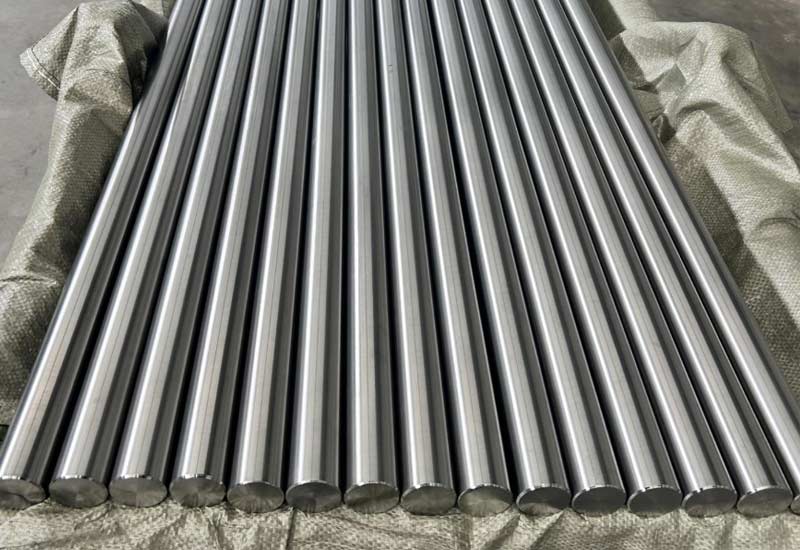
If the project needs short blanks rather than mill-length stock, compare the cutting and identification requirements in this titanium bar cut-to-size guide. The cut plan should preserve traceability while leaving enough material for facing and workholding.
Write an RFQ Around the Machining Route
A useful request for quotation explains the work the material must support. Attach the finished drawing for context and a separate stock or blank specification for the item being purchased.
For example, a request could explain:
We require Grade 5 titanium round bar for CNC-turned industrial components. Please review the attached blank specification and finished drawing. Confirm the material standard and edition, supply condition, diameter limits, straightness, surface condition and cut-length requirements. The blank dimensions include our planned machining allowance. Please identify any exceptions and describe the inspection documents and material identification supplied with each shipment.
Add the required quantity, delivery location and production schedule. Where a process decision remains open, ask for a proposed solution rather than leaving the supplier to make an unstated assumption.
If you are comparing raw material with prepared blanks or completed components, request those scopes separately. XFDY’s custom titanium processing services include size customization and machining, allowing the required supply stage to be discussed alongside the drawing.
Conclusion
Useful titanium bar stock is material that matches both the component specification and the way the shop intends to machine it. Grade and diameter start the order; supply condition, tolerances, allowance, inspection and identification make it ready for a proper technical review.
Send your drawing, proposed blank dimensions, quantity and documentation requirements to XFDY for a titanium bar specification review. Confirm the available supply options and any exceptions before releasing the order.
FAQ
Is Titanium Bar Stock the Same as a Finished Titanium Shaft?
No. Bar stock is the starting material. A finished shaft must meet its component drawing, including the required dimensions, geometry and surface characteristics. Keep the purchased stock dimensions separate from the finished dimensions, with machining allowance included where necessary.
Does Ground Titanium Bar Automatically Meet a Finished Part Tolerance?
No. “Ground” describes a finishing process, not every acceptance requirement. Confirm the supplied diameter limits, form, straightness and roughness against the drawing. Where an outside surface will remain unmachined, state its finished requirements explicitly.
Can Titanium Rods Be Supplied Cut to Length?
Cut-to-length supply can be requested, but the available size and preparation need supplier confirmation. Specify length tolerance, end condition and identification, and explain whether the ordered blank already includes the material needed for facing and gripping.
Is a Material Certificate Enough to Accept Titanium Bar Stock?
Not on its own. Check that the document matches the delivered material and satisfies the ordered reporting requirements. Also complete the agreed dimensional, surface and other receiving checks. Material test results do not replace inspection of the supplied geometry.
What Should a Machining Company Send to a Titanium Bar Supplier?
Send the approved material designation, stock or blank specification, relevant finished drawing, quantity and documentation requirements. Explain the machining route where it affects stock selection, and ask the supplier to identify any requirement it cannot meet as written.