
Table of Contents
Titanium export packaging is not only a logistics detail. For overseas buyers, it connects surface protection, traceability, receiving efficiency, and customs paperwork. A good packing request tells the supplier how titanium bars, sheets, tubes, and custom parts should be separated, labeled, protected, and documented before the shipment leaves the factory.
This guide focuses on practical titanium export packaging decisions for purchasing teams that order titanium materials or custom titanium products from an overseas manufacturer. It does not replace a freight forwarder, customs broker, or destination-country import rule. It gives buyers a clear manufacturing-side checklist before issuing a purchase order or request for quotation.
Why Export Packaging Matters for Titanium Orders
Titanium is often selected for corrosion resistance, strength-to-weight ratio, and reliable performance in demanding environments. Those material advantages do not remove the need for careful export packing. A scratched surface, mixed heat number, missing label, or incomplete packing list can still create receiving delays and additional inspection work.
For B2B titanium orders, the packaging plan should match the product form and the buyer’s receiving process. A distributor may need bundle labels that support warehouse put-away. A machine shop may need each cut length linked to a drawing or job number. An OEM buyer may need cartons separated by revision, material grade, and inspection batch.
Start With the Titanium Product Form
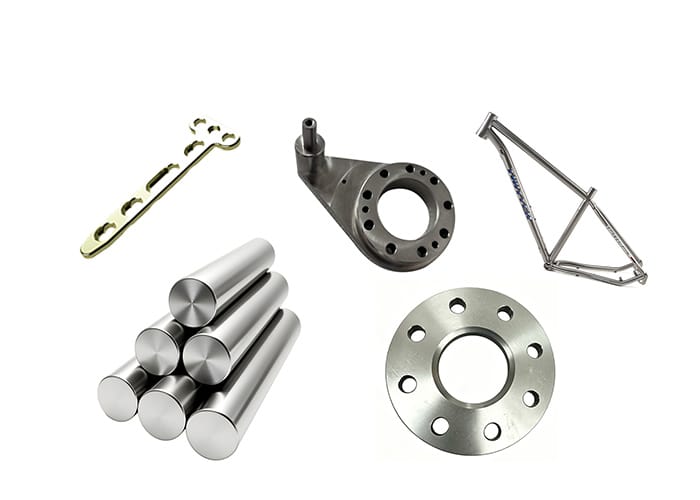
The first step is to define exactly what is being shipped. Titanium bar, titanium sheet, titanium tube, pipe fittings, fasteners, forgings, and CNC machined parts do not require the same protection. Even within one product form, the surface condition and tolerance requirement change the packing method.
For titanium bars and rods, buyers should state whether the material is full length, cut to size, polished, ground, or supplied with a standard mill surface. If you are purchasing cut lengths, link the packing instruction to the length tolerance and grade. XFDY’s related guide on titanium bar cut to size explains how length, grade, and tolerance should be specified before production.
For machined parts, the drawing revision, quantity per package, burr requirement, thread protection, and surface finish are more important than the gross package size alone. If the part has precision surfaces, holes, threads, sealing faces, or cosmetic surfaces, note which areas need protection and which areas can accept normal handling marks.
Select Protection Based on Surface and Quantity
The right protection method depends on how easily the product can be damaged and how the receiving team will inspect it. Bars may need separators between polished surfaces. Plates may need protected corners. Small machined parts may need trays, bags, or partitions so that parts do not rub against each other in transit.
Avoid vague wording such as export standard packing when surface condition matters. That phrase can mean different things to different suppliers. A clearer instruction is to define the acceptable packaging result: separate by grade and heat, prevent direct metal-to-metal contact on finished surfaces, protect threads, and keep labels visible after unpacking.

Marking, Labels, and Carton Information
Package labels should help the buyer receive goods without opening every carton or crate at random. For titanium products, useful label fields include item name, titanium grade, size or drawing number, heat or lot number, purchase order line, quantity, net weight, gross weight when applicable, carton or crate number, and destination mark.
International shipping also uses pictorial handling marks. ISO 780 is the international standard commonly associated with pictorial marking for handling goods. Buyers do not need to redesign packaging symbols, but they should tell the supplier if the shipment requires handling marks such as keep dry, this way up, center of gravity, or fragile handling based on product form.
Shipping Documents Buyers Should Confirm
Packaging and documents should agree with each other. If one crate contains three titanium grades, the packing list and crate label should make that visible. If a carton contains CNC parts from two drawing revisions, the documents should separate them clearly. The goal is simple: the buyer should be able to match the package, packing list, material certificate, and purchase order without guesswork.
A typical export document set may include a commercial invoice, packing list, bill of lading or air waybill provided through the logistics process, and material certificates or inspection records agreed in the purchase specification. When ordering titanium bar stock, ASTM’s ASTM B348 page is a useful reference for the bar and billet specification scope. For sheet and plate orders, ASTM B265 is commonly referenced through official standards channels.
Wood Packaging and ISPM 15 Considerations
If solid wood packaging is used for international trade, buyers should confirm whether the destination requires compliant treatment and marking under ISPM 15. The International Plant Protection Convention explains that the standard addresses wood packaging material in international trade, including dunnage. The official IPPC resource on ISPM 15 wood packaging material is the right place to verify the scope before shipment.
Do not assume every package needs the same wood treatment. Some shipments use plywood, processed wood, plastic, cartons, or metal frames, and the rules can differ by material and destination. The buyer, supplier, and freight forwarder should align the packaging material before final packing begins.
How to Compare Quotations on the Same Basis
When comparing titanium quotations, confirm whether export packaging is included. A lower unit price may exclude crates, part separation, special labels, moisture protection, or document preparation. A higher quotation may include those items and reduce receiving risk. Ask suppliers to state packaging scope line by line when the order has tight surface, traceability, or warehouse requirements.
The safest approach is to send the same purchase specification to every supplier. XFDY’s article on titanium purchase specification provides a broader checklist for grade, form, tolerance, certificates, inspection, and RFQ details. Use that specification together with packaging instructions so all quotations can be compared on the same basis.
| Order type | Packaging focus | Documents to confirm | Common buyer risk |
|---|---|---|---|
| Titanium bar, rod, or tube | Bundle security, end protection, surface separation | Packing list, material certificate, invoice, shipment marks | Different lengths or heats mixed without clear labels |
| Titanium sheet or plate | Flatness support, corner protection, moisture isolation | Size list, heat/lot traceability, export packing list | Surface scratches or bent corners during handling |
| CNC machined titanium parts | Part separation, cavity protection, drawing revision labels | Inspection report, drawing revision, quantity per carton | Small parts counted correctly but not separated by revision |
| Mixed titanium products | Item-level labeling and package-level consolidation | Consolidated packing list and itemized certificates | Warehouse delays because cartons cannot be matched to PO lines |
RFQ Checklist for Export Packaging
A strong RFQ should tell the supplier the product form, grade, quantity, size, surface condition, delivery method, destination country, packaging preference, label fields, document list, and any receiving constraints. If your team requires cartons below a certain weight, crates compatible with a forklift, or separation by purchase order line, include that before quoting.
For custom titanium products, attach the drawing and mark critical surfaces or protected features. Buyers can review XFDY’s custom titanium products page to understand the product scope before preparing an inquiry. If the order involves new parts, include expected sample quantity, repeat order forecast if available, and inspection requirements.
A practical CTA for this stage is simple: send XFDY the product form, grade, quantity, destination, and receiving requirements so the team can discuss suitable titanium export packaging and documentation before production or shipment.
Conclusion
Titanium export packaging works best when it is treated as part of the purchase specification, not as an afterthought. Clear instructions for separation, surface protection, labeling, wood packaging, and documents help buyers receive titanium materials and custom parts with fewer avoidable delays. Before placing an order, confirm the packaging method, label content, and document set with the supplier and logistics partner.