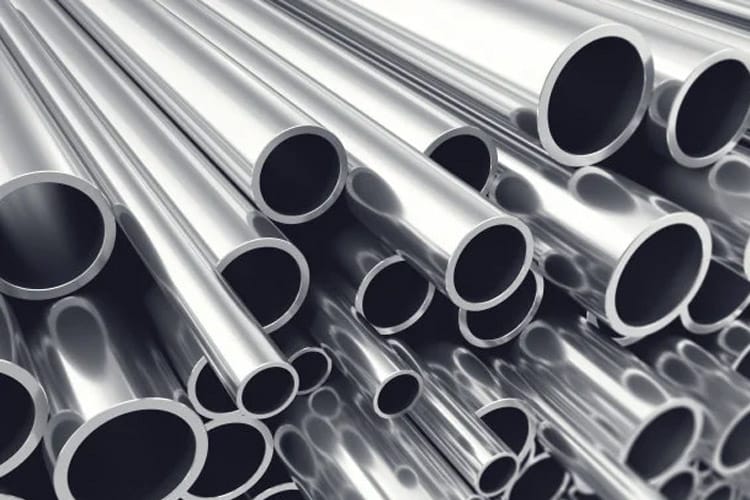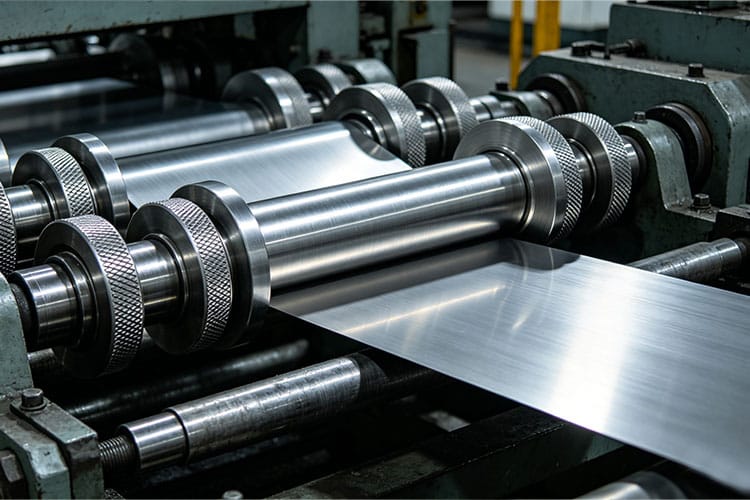
Titanium plate is often purchased as a raw material, but in many projects, the plate itself is only the first step.
A customer may need a corrosion-resistant equipment component, a precision-machined mounting part, a structural bracket, or a custom titanium part produced from a technical drawing. In each case, titanium plate can serve as the starting material before cutting, machining, forming or further processing.
The important question is not simply where titanium plate can be used. It is whether plate is the right starting form for the component being manufactured.
For relatively flat parts, structural components and custom CNC-machined products, titanium plates can offer a practical balance between material availability and manufacturing flexibility. For thicker or more complex parts, however, another starting form may reduce machining time and material waste.
Understanding these differences helps buyers make better material decisions before production begins.
At Xinfeng Dingyuan, titanium plate can be supplied as a material product or used as the starting point for drawing-based custom titanium products and precision components.
Table of Contents
What Is Titanium Plate Commonly Used For?
Titanium plate is used across industries where corrosion resistance, strength, weight reduction or material reliability are important.
Its applications range from large industrial equipment to relatively small precision-machined components. The same plate can also be processed in different ways depending on the finished product.
| Application Area | How Titanium Plate Is Used | Typical Manufacturing Process |
|---|---|---|
| Chemical processing | Corrosion-resistant equipment parts | Cutting, forming, welding |
| Marine equipment | Components exposed to seawater | Cutting, machining, fabrication |
| Industrial machinery | Structural and functional parts | CNC machining |
| Heat transfer equipment | Titanium plates and custom components | Cutting, forming, welding |
| Precision manufacturing | Drawing-based machine components | CNC machining and finishing |
| Medical-related manufacturing | Custom titanium components | Precision machining and inspection |
| Energy equipment | Corrosion-resistant or high-performance parts | Machining and fabrication |
Titanium’s combination of corrosion resistance, strength and relatively low density makes it useful in demanding engineering applications. The material characteristics and standard specifications for titanium and titanium alloys are also covered by organizations such as ASTM International.
The application determines more than the titanium grade. It can also affect plate thickness, surface requirements, starting dimensions and the type of processing required.

Titanium Plate for Chemical Processing Equipment
One of the most established titanium plate applications is in chemical processing.
Many chemical environments are difficult for conventional metals. Depending on the medium, temperature and operating conditions, corrosion can shorten the service life of equipment and increase maintenance requirements.
Titanium is often considered because of its corrosion resistance. Titanium plate can be used to manufacture:
- Chemical processing equipment
- Tanks and vessels
- Equipment linings
- Reaction system components
- Heat exchanger parts
- Corrosion-resistant fabricated structures
For these applications, the material selection should be based on the actual service environment.
A general description such as “chemical use” is usually not enough. The medium, concentration, temperature and operating conditions can all influence the most suitable titanium grade.
Grade 2 is commonly used in many corrosion-resistant industrial applications, while other environments may require a different titanium specification. Buyers can also refer to ASTM B265, a widely recognized specification covering titanium and titanium alloy strip, sheet and plate.
For fabricated components, the manufacturing process may involve cutting, forming and welding after the titanium plate has been prepared.
Titanium Plate in Marine and Seawater Applications
Marine equipment presents another environment where corrosion resistance can be a major factor.
Seawater exposure can be challenging for many metals, particularly when components are expected to operate for long periods with limited maintenance.
Titanium plate can be used to produce:
- Marine equipment components
- Seawater handling parts
- Pump and system components
- Structural elements
- Custom corrosion-resistant parts
The finished component may begin as a standard titanium plate before being cut or machined according to the design.
For relatively flat parts, plate can be an efficient starting material. For a thick or cylindrical component, however, machining from plate may not be the most practical option.
This distinction is important for custom projects because the cheapest material form is not always the lowest-cost manufacturing route.
Titanium Plate for Custom CNC-Machined Parts
One of the most important uses of titanium plate is as a starting material for custom machined components.
A plate can be cut into blanks and then machined into parts with specific dimensions, holes, threads, pockets and surface requirements.
Typical examples include:
- Mounting plates
- Machine components
- Structural brackets
- Precision flat parts
- Equipment interfaces
- Custom industrial components
For these parts, the starting plate dimensions should not simply match the finished dimensions on the drawing.
Machining allowance may be required.
If the finished component requires machining on multiple surfaces, the starting material must provide enough stock for material removal. The same applies to length and width.
A properly prepared blank can reduce unnecessary machining and make the production process easier to control.
This is where titanium plate becomes closely connected to custom titanium alloy components.
The plate is not necessarily the final product. It can be selected and prepared according to the dimensions and manufacturing requirements of the part that needs to be produced.
When Titanium Plate Is the Right Starting Material
Titanium plate is generally a good option when the finished part has a relatively flat or plate-like geometry.
It can also work well when the required component can be efficiently cut from a larger plate before machining.
| Part Characteristic | Is Titanium Plate Usually a Good Starting Option? | Reason |
|---|---|---|
| Flat component | Yes | Plate geometry is already close to the finished shape |
| Mounting bracket | Often | Blanks can be efficiently cut before machining |
| Structural plate | Yes | Requires limited material removal |
| Thin precision component | Often | Suitable thickness can reduce excess machining |
| Thick round part | Not always | A bar or block may reduce material waste |
| Complex 3D geometry | Depends | A forging or custom blank may be more efficient |
| High-volume repeat part | Depends | Optimized blanks may improve material utilization |
This is why the drawing should be reviewed before selecting the starting material.
A titanium plate may be ideal for one component and inefficient for another.
For drawing-based projects, it is often more useful to start with the finished component and then determine whether plate, bar, forging or another material form offers the best manufacturing route.
Plate Thickness Can Affect the Entire Manufacturing Process
Thickness is one of the first details buyers consider when sourcing titanium plate.
But for custom manufacturing, the nominal thickness is only part of the decision.
Suppose the finished part needs to be 15 mm thick. If both surfaces require machining, starting with a 15 mm plate may not leave enough material to achieve the final dimensions.
The blank needs appropriate allowance.
The required starting thickness can also be affected by:
- Surface condition
- Flatness requirements
- Machining depth
- Final tolerance
- Finishing operations
The goal is to select a starting thickness that supports manufacturing without purchasing significantly more material than necessary.
For a standard material order, this may be a straightforward dimension calculation. For a drawing-based project, reviewing the finished component first can help determine a more practical blank size.
Customers sourcing both material and finished parts can discuss these requirements as part of a custom titanium products project rather than treating material purchasing and machining as two completely separate steps.
Titanium Plate Machining: What Changes Compared With Other Metals?
Titanium machining requires its own approach.
Titanium does not behave exactly like aluminum or ordinary steel during machining. Heat can concentrate near the cutting zone, and poor machining conditions can affect both tooling and surface quality.
For titanium plate machining, manufacturers typically need to consider:
- Tool selection
- Machine rigidity
- Cutting parameters
- Tool engagement
- Chip evacuation
- Heat management
The geometry of the component also matters.
A simple mounting plate with drilled holes may require a relatively straightforward machining process. A precision component with deep pockets, thin walls and multiple machined surfaces requires a more carefully planned approach.
General guidance on titanium machining and material behavior is also available through engineering and technical resources published by organizations such as ASM International.
This is another reason why customers sourcing finished custom titanium parts should provide a drawing instead of only requesting a specific plate size.
The machining requirements can influence the most suitable starting material.
From Titanium Plate to a Finished Custom Component
The route from titanium plate to a finished component can vary depending on the design.
A typical project may include the following stages.
Material Selection
The appropriate titanium grade is selected based on strength, corrosion resistance and application requirements.
Plate Preparation
The plate is selected according to the required thickness and starting dimensions.
The material may then be cut into smaller blanks before machining.
CNC Machining
The blank is machined according to the drawing.
This may include:
- Milling
- Drilling
- Threading
- Pocket machining
- Surface machining
- Multi-axis operations for complex geometry
Surface Finishing
Depending on the application, the component may require a standard machined finish, polishing, controlled roughness or another specified surface condition.
Inspection
The finished part is checked according to the required dimensions and technical specifications.
| Manufacturing Stage | Main Objective |
|---|---|
| Material selection | Match the titanium grade to the application |
| Blank preparation | Create an efficient starting size |
| CNC machining | Produce the required geometry |
| Surface finishing | Achieve the specified surface condition |
| Inspection | Verify dimensions and critical requirements |
For customers, combining these stages into one manufacturing project can simplify the transition from raw titanium material to a finished component.
This is also where custom titanium alloy components can provide a more complete solution for projects that begin with a material requirement but ultimately need a finished part.
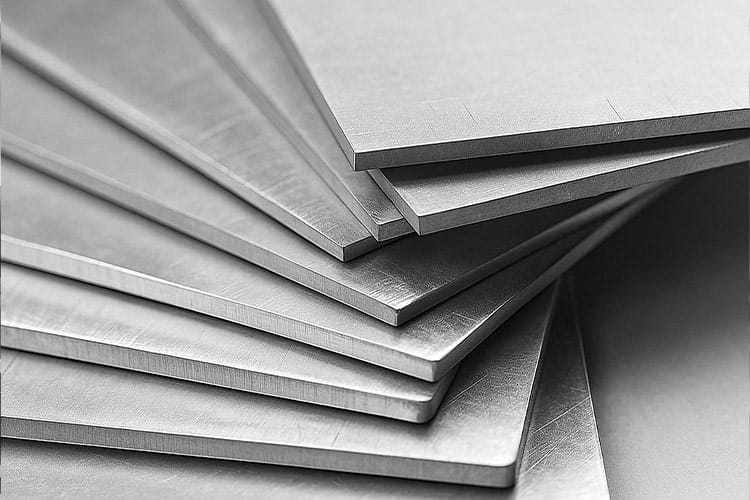
Titanium Plate or Another Starting Material?
Titanium plate is versatile, but it is not always the best option.
A component with substantial thickness or a largely cylindrical shape may require excessive machining if it starts as a rectangular plate.
In that situation, titanium bar, block, forging or a custom-prepared blank may provide better material utilization.
| Starting Material | Best Suited For | Main Benefit |
|---|---|---|
| Titanium Plate | Flat and structural components | Flexible dimensions and efficient blank cutting |
| Titanium Bar | Round or cylindrical parts | Less material removal for suitable geometries |
| Titanium Block | Thick precision components | Suitable for substantial CNC machining |
| Titanium Forging | Complex or high-strength parts | Can reduce machining volume |
| Custom Blank | Repeat or specialized components | Can be prepared closer to final geometry |
The best starting material should be selected based on the finished component rather than simply choosing the material form that is easiest to purchase.
This is particularly important when the titanium part has a high material removal rate or will be produced repeatedly.
Titanium Plate Applications in Precision Manufacturing
Titanium plate is not only used for large industrial equipment.
It can also serve as a starting material for relatively small precision components.
These parts may require:
- Tight tolerances
- Precision hole locations
- Threaded features
- Controlled surface finishes
- High strength
- Corrosion resistance
For these applications, material selection and machining are closely connected.
The titanium grade influences the material properties, while the geometry determines how the plate should be cut and machined.
A customer may initially request titanium plate but ultimately require a finished part ready for assembly.
This is where material supply and precision manufacturing overlap.
Xinfeng Dingyuan supports both titanium material requirements and drawing-based custom titanium products, allowing customers to evaluate the starting material and manufacturing route around the finished component.
Titanium Plate in Medical-Related Manufacturing
Titanium and titanium alloys are also used in medical-related manufacturing, particularly where specific material properties and strict manufacturing requirements are needed.
For custom medical components, titanium plate may be used as a starting material for precision-machined parts.
However, a medical-related project should not be approached in the same way as a general industrial component.
Requirements may include:
- Specific material grades
- Material traceability
- Precision tolerances
- Surface requirements
- Inspection documentation
Depending on the component and specification, Grade 23 titanium may be selected.
The material grade alone, however, does not define the complete manufacturing requirement.
For drawing-based projects, it is important to clarify the intended application and any relevant technical or documentation requirements before production.
This helps establish whether titanium plate is the right starting material and what level of manufacturing and inspection control is required.
For projects involving drawing-based medical parts, customers can also explore Xinfeng Dingyuan’s Titanium Medical Components capabilities.
What Information Should You Provide When Ordering Titanium Plate for a Custom Part?
A request for titanium plate becomes much more useful when the supplier understands the finished application.
For a custom component, providing only the plate dimensions may not give enough information to select the most efficient manufacturing route.
A more complete inquiry may include:
| Information | Why It Is Useful |
|---|---|
| Finished-part drawing | Defines geometry and dimensions |
| Titanium grade | Determines material properties |
| Required quantity | Helps plan the production method |
| Final tolerances | Affects machining and inspection |
| Surface requirements | Determines finishing operations |
| Application | Helps evaluate material suitability |
| Certification requirements | Clarifies documentation needs |
If the titanium grade or starting material has not yet been finalized, providing the application details can be more useful than selecting a material based only on previous projects.
A drawing combined with information about the working environment can provide a stronger starting point for material selection and manufacturing planning.
How Xinfeng Dingyuan Supports Titanium Plate and Custom Manufacturing Projects
Titanium plate can be supplied as a raw material, but for many customers, the requirement does not end there.
The plate may need to be cut, prepared and machined into a custom component according to a drawing.
At Xinfeng Dingyuan, Titanium Plates, Custom Titanium Products and Custom Titanium Alloy Components can be considered as part of the same project.
For relatively flat parts, titanium plate may provide the most practical starting point.
For thicker or more complex components, another material form may reduce unnecessary machining and improve material utilization.
Reviewing the finished part before production makes it easier to select a suitable manufacturing route.
The objective is not simply to supply titanium plate.
It is to help customers start with a material form that makes sense for the component they actually need.
FAQ
What are the main titanium plate applications?
Titanium plate is used in chemical processing, marine equipment, industrial machinery, heat transfer equipment, precision manufacturing and custom titanium component production.
Can titanium plate be used for CNC machining?
Yes. Titanium plate is commonly used as a starting material for CNC-machined components, particularly flat parts, structural components and custom precision parts.
Is titanium plate suitable for custom titanium products?
Yes. Titanium plate can be cut into blanks and machined into drawing-based custom components. The finished geometry determines whether plate is the most efficient starting material.
How do I choose the right titanium plate thickness?
The starting thickness should account for the finished part dimensions, machining allowance, tolerance requirements and any surface finishing operations.
Is titanium plate always the best material form for a custom part?
No. For thick, round or complex components, titanium bar, block, forging or a custom blank may provide better material utilization and reduce machining time.
Final Thoughts
Titanium plate is used for far more than standard material supply.
For chemical equipment, marine systems and industrial applications, it can provide the starting material for corrosion-resistant and high-performance components. In precision manufacturing, it can also become the foundation for custom titanium parts produced to specific drawings and tolerances.
The key is to select the plate based on the finished application.
For a flat or plate-like component, titanium plate may be the most efficient starting material. For a thicker or more complex design, another titanium form may offer a better manufacturing route.
If you are sourcing titanium plate for a drawing-based project, Xinfeng Dingyuan can review the material requirements together with the finished component design.
From Titanium Plates to Custom Titanium Products and Custom Titanium Alloy Components, the manufacturing approach can be planned around what the finished part actually needs.