When ordering custom titanium parts, choosing the right manufacturing process can be just as important as choosing the titanium grade.
Titanium forging and CNC machining are both widely used to produce precision components, but they solve different manufacturing problems. Forging can create near-net-shape parts with favorable mechanical properties, while CNC machining is better suited to complex geometries, tight tolerances, and detailed features.
The right process depends on the part design, material, required properties, dimensional tolerances, production volume, and overall cost.
This guide compares titanium forging and CNC machining to help engineers and purchasing teams determine which manufacturing route makes sense for a specific component.
Table of Contents
What Is Titanium Forging?
Titanium forging is a manufacturing process in which titanium material is heated and shaped under controlled pressure using dies, presses, or other forming equipment.
Instead of removing material to create the final geometry, forging changes the shape of the titanium blank.
Depending on the component design, titanium forging can produce a shape that is already close to the final dimensions. Additional machining may then be used to achieve precise dimensions, holes, threads, grooves, or other features.
Titanium forgings are commonly considered for components that require a combination of mechanical performance, structural integrity, and controlled geometry.
Typical applications include:
- Aerospace components
- Industrial machinery parts
- Medical components
- Automotive and transportation components
- High-performance equipment
- Titanium connecting components
- Custom structural parts
ASTM B381 covers titanium and titanium alloy forgings and specifies requirements for different titanium grades and forging products. ASTM B381 Titanium and Titanium Alloy Forgings
What Is Titanium CNC Machining?
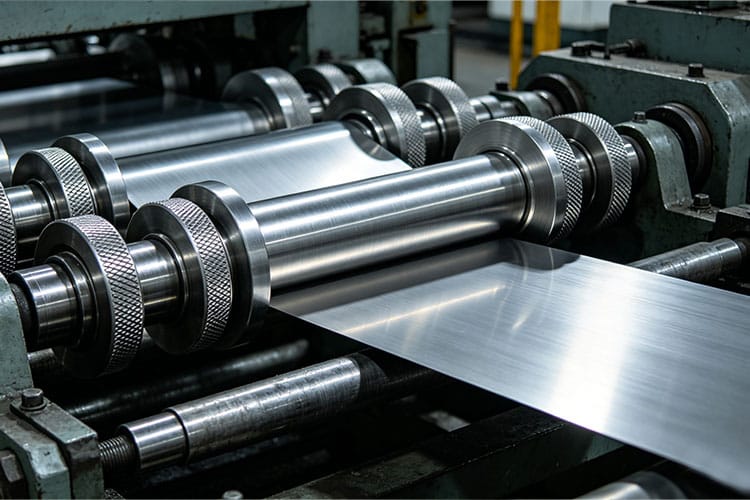
Titanium CNC machining uses computer-controlled machine tools to remove material from titanium stock and produce a finished component.
Depending on the design, machining can include:
- Milling
- Turning
- Drilling
- Threading
- Boring
- Reaming
- Grinding
- Precision finishing
CNC machining is particularly useful when the finished component contains complex surfaces, tight tolerances, internal holes, threads, pockets, or other features that cannot be efficiently produced through basic forming.
A part can be machined directly from titanium bar, plate, block, billet, or forged stock.
For example, a custom titanium bolt may start from titanium bar before being turned and milled into its final geometry. A complex medical component may begin as a forged blank and then undergo CNC machining to achieve its final dimensions.
Titanium Forging vs CNC Machining: Key Differences
The fundamental difference is how the material reaches its final shape.
Forging shapes titanium through controlled deformation.
CNC machining removes titanium to create the required geometry.
| Factor | Titanium Forging | Titanium CNC Machining |
|---|---|---|
| Basic process | Forms titanium under pressure | Removes material with cutting tools |
| Material waste | Generally lower for near-net shapes | Can be higher for complex parts |
| Part geometry | Best for suitable forged shapes | Excellent for complex geometries |
| Dimensional precision | Usually followed by machining for tight tolerances | Excellent for precision features |
| Mechanical properties | Can provide favorable forged structure | Depends on starting material and machining |
| Tooling | Requires forging dies for many shapes | Uses CNC tooling and fixtures |
| Initial tooling cost | Can be significant | Generally lower for low-volume work |
| High-volume production | Often attractive | Can also be effective depending on geometry |
| Complex features | Often require secondary machining | Highly suitable |
| Material utilization | Often favorable | Depends strongly on part geometry |
| Typical use | Structural and load-bearing parts | Precision and complex components |
Neither process is universally better.
In many real-world applications, the most efficient solution is actually a combination of both.
When Is Titanium Forging the Better Choice?
Forging becomes attractive when the component requires a suitable forged geometry and the production volume justifies the tooling and setup involved.
One of the main advantages is the ability to produce a shape closer to the final component before machining.
This can reduce the amount of material that must be removed during subsequent CNC operations.
Forging can also be useful for components where the manufacturing process needs to produce controlled mechanical properties and a suitable internal structure.
For larger production runs, the initial investment in forging dies can be distributed across many parts, potentially improving the economics of each component.
Titanium Forging for High-Strength Components
Titanium forging is commonly considered for components subjected to demanding mechanical loads.
Ti-6Al-4V, commonly identified as Grade 5 titanium, is an important titanium alloy used in forged components.
However, the final mechanical properties depend on more than the alloy designation. Factors such as forging temperature, deformation, heat treatment, material condition, and inspection requirements can influence the finished component.
For critical components, the applicable specification should therefore define the required material condition and testing rather than relying only on the alloy name.
When Is CNC Machining the Better Choice?
CNC machining is often the more practical option when the component has complex geometry, tight tolerances, or relatively low production volume.
A CNC machine can produce features such as:
- Precision holes
- Threads
- Slots
- Pockets
- Contoured surfaces
- Internal features
- Flat surfaces
- Complex profiles
It is also useful when the customer already has a finished drawing and requires a component to be manufactured to specific dimensions.
For prototypes and small production runs, CNC machining can be particularly attractive because it does not normally require dedicated forging dies for every new part.
Why Is Titanium CNC Machining Challenging?
Titanium is machinable, but it behaves differently from many conventional engineering metals.
Its relatively low thermal conductivity means that heat generated during cutting can remain concentrated around the cutting area.
Titanium can also have a strong tendency to interact with cutting tools under inappropriate machining conditions.
This means that successful titanium machining requires appropriate:
- Cutting parameters
- Tool geometry
- Tool materials
- Coolant application
- Feed rates
- Cutting speeds
- Chip control
- Workholding
Machining conditions should be selected according to the specific titanium grade, component geometry, machine capability, and tooling system.
The goal is not simply to remove material quickly. It is to achieve the required dimensional accuracy and surface finish while maintaining tool life and process stability.
Forging vs Machining: Which Gives Better Mechanical Performance?
This question does not have a simple yes-or-no answer.
Forging can be advantageous when the component design benefits from a forged material structure and controlled deformation.
However, machining itself does not automatically make a titanium component mechanically inferior. The final performance depends on the starting material, grain structure, heat treatment, machining process, component geometry, surface condition, and service requirements.
For a highly loaded component, engineers should evaluate the complete manufacturing route rather than choosing forging or machining based on general assumptions.
For some components, the optimal process is:
Titanium billet → forging → heat treatment → CNC machining → inspection
This allows forging to establish the basic component shape while CNC machining provides the required precision.
Titanium Forging and CNC Machining Can Be Combined
In industrial manufacturing, forging and CNC machining are often complementary rather than competing processes.
A forged blank can reduce the amount of material that needs to be removed during CNC machining.
For example, imagine a titanium component with a complex outer profile and several precision holes.
Producing the entire component from a rectangular titanium block may require substantial machining.
Instead, the manufacturer can forge a near-net-shape blank and then machine the critical surfaces and holes.
The result can be a more efficient manufacturing route when the production volume and component design justify forging.
This approach is particularly relevant for larger or more structurally demanding components.
Which Process Is Better for Complex Titanium Parts?
For highly complex precision components, CNC machining is often more flexible.
A CNC machine can create geometries that would be difficult or uneconomical to produce directly through forging.
This is especially true for:
- Small batches
- Prototype components
- Components with many precision features
- Parts requiring tight dimensional tolerances
- Products that change frequently during development
However, “complex” does not automatically mean “CNC only.”
Some complex parts can still be forged into a suitable near-net shape and then finished through CNC machining.
The decision should therefore be based on the actual geometry and production requirements.
Which Process Is Better for Tight Tolerances?
CNC machining is generally the preferred process when very specific dimensional tolerances need to be achieved on finished surfaces.
Forging can provide a controlled shape, but the final forged component often requires machining to achieve tighter dimensions.
This creates a common manufacturing sequence:
Forging for shape → CNC machining for precision
The required tolerance should be specified on the engineering drawing.
Not every surface necessarily needs the same tolerance. Applying unnecessarily tight tolerances to every dimension can increase machining time and manufacturing cost without improving the performance of the component.
Which Process Produces Less Material Waste?
Material utilization depends heavily on the component design.
CNC machining removes material from a larger piece of stock. If the finished component has a highly complex shape, a significant amount of material may become chips.
Forging can reduce this material-removal requirement by creating a shape closer to the finished component.
However, forging itself has material losses associated with billet preparation, flash, trimming, machining allowances, and other production steps.
For this reason, material utilization should be calculated for the actual part rather than assuming forging always produces less waste.
For expensive titanium alloys, material utilization can become an important factor in the overall manufacturing cost.
Which Process Costs More?
The answer depends on production volume and part geometry.
Forging usually requires tooling, die development, setup, and process preparation. This can make it less attractive for prototypes or very small quantities.
Once the tooling has been established, however, forging can become more economical for larger production volumes.
CNC machining has a different cost structure.
There is generally less dedicated tooling, but each part requires machine time, cutting tools, programming, workholding, and material removal.
A simplified comparison looks like this:
| Production Situation | Often More Suitable |
|---|---|
| One prototype | CNC machining |
| Small batch | CNC machining |
| Complex precision part | CNC machining |
| High-volume structural component | Forging + machining |
| Near-net-shape requirement | Forging |
| Very tight final tolerances | CNC machining |
| Large material-removal requirement | Forging + machining |
| Frequently changing design | CNC machining |
These are general guidelines rather than fixed rules. A manufacturing quotation should be based on the actual drawing, quantity, material, tolerances, and inspection requirements.
How Does Part Size Affect the Decision?
Part size can influence the economics of both processes.
Large titanium parts may require substantial machining time if produced entirely from solid stock.
In such cases, forging can reduce the starting material volume and shorten subsequent machining operations.
On the other hand, very small and highly precise components may be easier to produce directly through CNC machining, especially when production volumes are limited.
The available forging equipment and die size also matter.
A supplier should therefore evaluate the actual dimensions rather than selecting a process based solely on whether a part is “large” or “small.”
How Does Production Volume Affect Process Selection?
Production volume is one of the most important factors in the forging-versus-machining decision.
For a single prototype, creating dedicated forging tooling may not make economic sense.
CNC machining allows the manufacturer to move from a drawing to a finished part without making dedicated forging dies.
As volume increases, however, the economics can change.
If thousands of identical components are required, reducing machining time and material consumption can become more important than minimizing initial tooling costs.
This is where forging can become increasingly attractive.
For medium-volume projects, a hybrid process may provide a useful balance between tooling investment and machining efficiency.
What About Titanium Prototypes?
CNC machining is usually a practical starting point for titanium prototypes.
Designs often change during product development, and CNC machining allows modifications without redesigning dedicated forging dies.
Once the design has been validated and production volume increases, the manufacturing route can be reevaluated.
A company may move from:
Prototype CNC machining → low-volume CNC production → forged blank + CNC finishing
This can reduce long-term manufacturing costs while maintaining the required component quality.
How Do You Choose Between Forged and Machined Titanium Parts?
Use the following questions when reviewing a new component.
What Is the Production Quantity?
Low-volume projects generally favor flexible manufacturing processes.
Higher production volumes may justify dedicated tooling and optimized forming processes.
How Complex Is the Geometry?
If the component contains many detailed features, CNC machining may be necessary for the final geometry.
If the component has a suitable structural shape, forging may reduce the amount of subsequent machining.
How Tight Are the Tolerances?
If tight dimensional tolerances are required, plan for CNC machining on the relevant surfaces.
How Much Material Needs to Be Removed?
If machining would remove a large percentage of the original titanium stock, consider whether a forged near-net-shape blank could improve material utilization.
What Mechanical Requirements Does the Component Have?
For load-bearing components, evaluate whether forging provides advantages for the required application and specification.
What Is the Target Cost?
Consider tooling, raw material, machining time, inspection, finishing, and production volume together.
Looking only at the initial tooling cost or raw material price can produce a misleading comparison.
Titanium Forging vs CNC Machining: A Practical Example
Consider a custom titanium industrial component with a relatively complex external profile, several drilled holes, and multiple precision mounting surfaces.
Producing the entire part from titanium block may require extensive material removal.
For a small quantity, CNC machining may still be the most economical solution because there is no need to develop dedicated forging tooling.
For a large production order, however, a forged blank could approximate the external profile before machining.
The manufacturing route could become:
Titanium billet → forged blank → trimming → heat treatment → CNC machining → surface finishing → inspection
The forged blank reduces the amount of material that needs to be removed during CNC machining, while CNC processing provides the final dimensional accuracy.
This is a good example of why the question should not always be “forging or machining?”
Sometimes the better question is:
Where should forging end and CNC machining begin?
What Information Should You Give a Titanium Manufacturer?
A supplier cannot accurately recommend a manufacturing process from the material grade alone.
For a custom titanium component, provide:
- Engineering drawing
- 3D CAD model if available
- Titanium grade
- Finished dimensions
- Tolerances
- Quantity
- Surface finish requirements
- Heat treatment requirements
- Testing requirements
- Applicable standards
- Intended application
- Service environment
A drawing is particularly valuable because it allows the manufacturer to evaluate geometry, machining allowances, forging feasibility, tooling requirements, and inspection points.
For custom titanium components, Xinfeng Dingyuan offers titanium processing, forging, and machining capabilities for different component requirements. Titanium Processing & Forgings
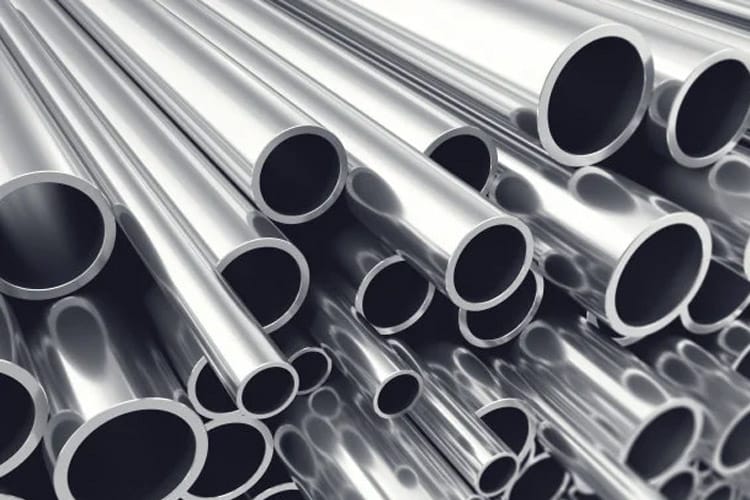
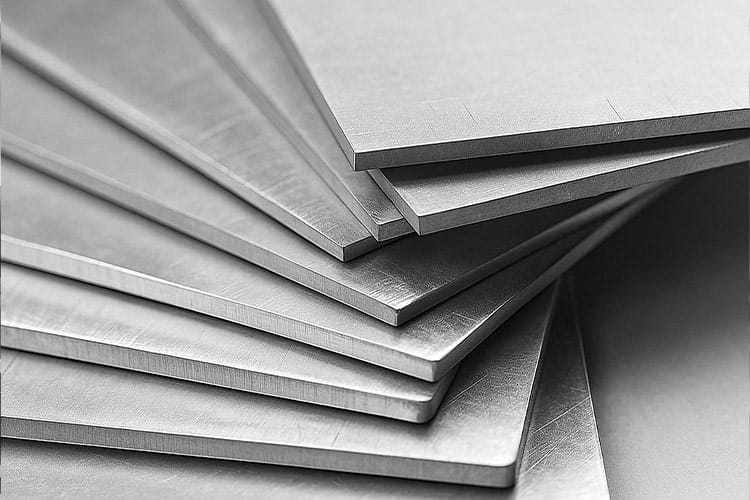
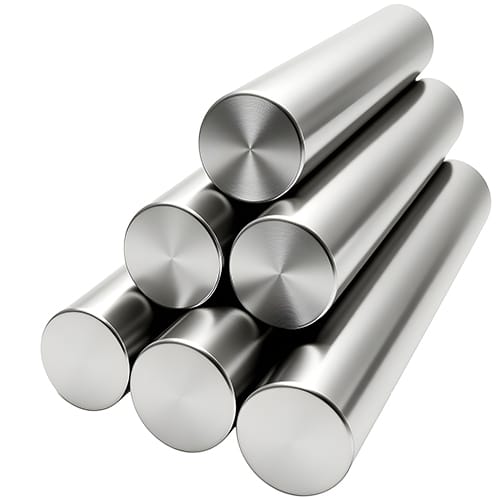
The company’s titanium material range also includes titanium plates, sheets, bars, rods, wire, and tubes, providing different starting material options for custom manufacturing.
Can Titanium Parts Be Manufactured From Drawings?
Yes.
Custom titanium components can be manufactured according to engineering drawings, specifications, and samples, provided the requirements can be evaluated and produced within the available manufacturing capabilities.
The manufacturing process may involve forging, CNC machining, or a combination of processes.
For example, a custom titanium fastener may be machined directly from bar stock, while a larger structural component may benefit from forging before precision machining.
The best manufacturing route depends on the component rather than the product name alone.
How to Reduce the Cost of Custom Titanium Parts
Cost reduction does not necessarily mean choosing a cheaper titanium grade.
Instead, look at the entire manufacturing route.
Several factors can have a meaningful effect on cost:
Use appropriate tolerances
Do not specify extremely tight tolerances where they are not functionally necessary.
Choose the right starting material
The appropriate plate, bar, billet, or forged blank can reduce unnecessary material removal.
Consider forging for higher-volume parts
For suitable geometries and larger quantities, forging may reduce machining time and material consumption.
Design for machining
Avoid unnecessary deep pockets, difficult internal features, and excessively complex geometries when the application does not require them.
Specify surface finish based on function
A highly polished or specialized surface may add processing cost if it does not provide a functional benefit.
Provide complete drawings
Clear technical information reduces quotation uncertainty and minimizes the risk of producing the wrong component.
Final Thoughts
Titanium forging and CNC machining are not competing processes in every application.
Forging is often valuable when a component requires a suitable near-net shape, controlled mechanical properties, and efficient production at higher volumes. CNC machining provides greater flexibility for complex geometries, prototypes, small batches, and precision features.
For many custom titanium components, the most practical solution combines both:
Forge the basic shape, then CNC machine the critical features.
The right decision depends on the titanium grade, component geometry, production volume, dimensional tolerances, mechanical requirements, material utilization, tooling investment, and total manufacturing cost.
If you are developing a new titanium component, provide the manufacturer with the drawing, material requirements, quantity, tolerances, and application details. A review of the complete part can then determine whether direct CNC machining, forging, or a combined manufacturing route is the most suitable option.
FAQ
Is titanium forging better than CNC machining?
Neither process is universally better. Forging can be advantageous for suitable structural components and larger production volumes, while CNC machining is more flexible for complex geometries and precision features.
Is CNC machining titanium expensive?
Titanium CNC machining can cost more than machining easier-to-cut metals because it requires appropriate tooling, cutting parameters, cooling, and process control. Part geometry and material removal also have a major impact on cost.
Can a titanium part be forged and CNC machined?
Yes. Forging and CNC machining are frequently combined. A forged blank can provide the basic shape, while CNC machining produces the final dimensions and precision features.
Which is better for titanium prototypes?
CNC machining is often suitable for prototypes because it requires less dedicated tooling and allows design changes without producing new forging dies.
Is titanium forging suitable for high-volume production?
For suitable part geometries, forging can become attractive for higher production volumes because tooling and process costs can be distributed across more parts.
Which process gives tighter tolerances?
CNC machining is generally used to achieve tighter final dimensional tolerances. Forged components often undergo machining on critical surfaces where precise dimensions are required.
How do I decide between titanium forging and machining?
Compare the part geometry, titanium grade, production volume, required tolerances, mechanical requirements, material utilization, tooling cost, machining time, and total component cost.