Table of Contents
- Understand the Difference in Manufacturing Route
- Connect Tube Choice with Service Conditions
- Define Dimensions and Tolerances
- Review Surface and End Requirements
- Specify Inspection and Documents
- RFQ Information Checklist
Seamless and welded titanium tubes are used in heat exchangers, chemical equipment, seawater systems, condensers, and precision industrial assemblies. Buyers often compare tube options because both can be suitable, but the best choice depends on service conditions, dimensions, inspection needs, and fabrication method.
This article explains how to choose seamless and welded titanium tubes without relying on vague assumptions. It helps engineers and purchasing teams prepare a clearer RFQ.
Understand the Difference in Manufacturing Route
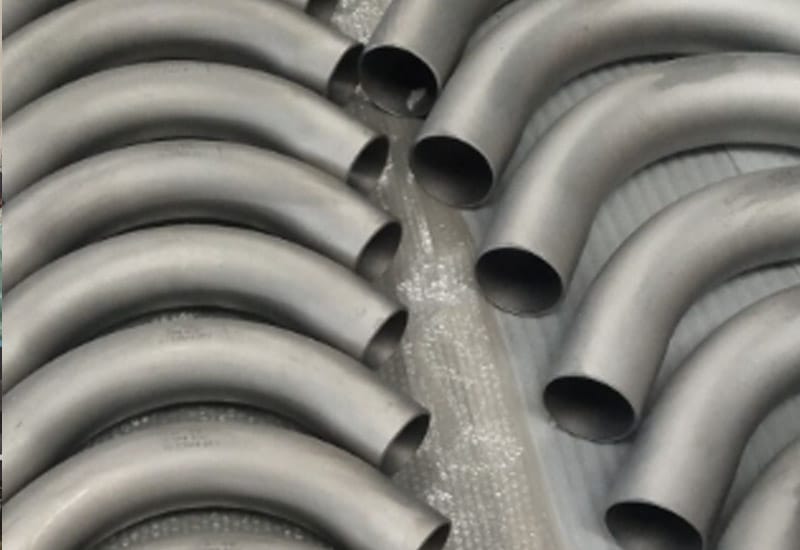
Seamless and welded titanium tubes are made by different routes, which can influence available size range, production time, surface condition, and application fit. Seamless tubes are produced without a welded seam, while welded tubes are formed and joined from strip or sheet.
The choice should be based on the project requirement. Seamless and welded titanium tubes can both be useful when grade, dimensions, inspection, and working environment are properly specified.
Connect Tube Choice with Service Conditions
Service conditions should come before cost discussions. Tubes used in seawater, chloride environments, chemical media, or heat exchange service need careful attention to grade, wall thickness, surface condition, and inspection requirements.
When buyers describe temperature, media, pressure, and cleaning cycles, suppliers can recommend whether seamless and welded titanium tubes are suitable for the requested application.
| Selection Point | What to Specify | Why It Matters |
|---|---|---|
| Tube type | Seamless or welded | Affects manufacturing route and application fit |
| Dimensions | OD, wall thickness, length, tolerance | Controls assembly and pressure-related design |
| Application | Heat exchanger, chemical, marine, or structure | Guides grade, inspection, and finish |
| Testing | Dimensional, surface, certificate, or project tests | Supports reliable incoming inspection |
Define Dimensions and Tolerances
Outside diameter, wall thickness, length, straightness, and tolerance should be written clearly. Tube dimensions affect assembly fit, flow design, heat transfer surface, and compatibility with fittings or tube sheets.
If bending, cutting, welding, or expansion will be performed later, include that information. Seamless and welded titanium tubes may need different handling depending on the downstream process.
Review Surface and End Requirements
Surface finish matters for both performance and processing. Internal and external surface condition can affect cleaning, flow, inspection, and later fabrication. Tube ends may need to be cut, deburred, capped, or prepared for welding.
Packaging should protect tube ends and surfaces. Long tubes can be damaged during transport if bundling and separation are not planned properly.
Specify Inspection and Documents
Inspection may include dimensional checks, surface inspection, material certificates, and project-specific testing if required. Buyers should agree on documentation before the order is placed.
For general material background, the titanium overview helps explain why titanium is used in corrosive systems. Seamless and welded titanium tubes still need project-specific verification.