Table of Contents
- Start with the Liquid and Equipment Type
- Define Geometry Before Discussing Production
- Choose the Grade and Manufacturing Route
- Control Surface Finish and Balance
- Inspection and Documentation
- What to Send for a Quote
A titanium impeller is often selected for equipment that handles corrosive media, seawater, chemical liquids, or weight-sensitive rotating assemblies. The material can be valuable, but performance depends on geometry, balance, surface quality, and how well the part matches the equipment design.
This guide explains how to specify a titanium impeller for pumps, mixers, and industrial machinery. It focuses on practical purchasing and manufacturing details that help reduce mistakes before production.
Start with the Liquid and Equipment Type
The working liquid should guide the material discussion. A titanium impeller used in seawater service, chemical circulation, or corrosive mixing equipment faces different risks from a general mechanical part. Media chemistry, temperature, solids, and cleaning cycles all matter.
The equipment type also matters. Pump impellers, mixer impellers, and custom rotating parts may require different blade geometry, hub design, balance level, and inspection plan.
Define Geometry Before Discussing Production
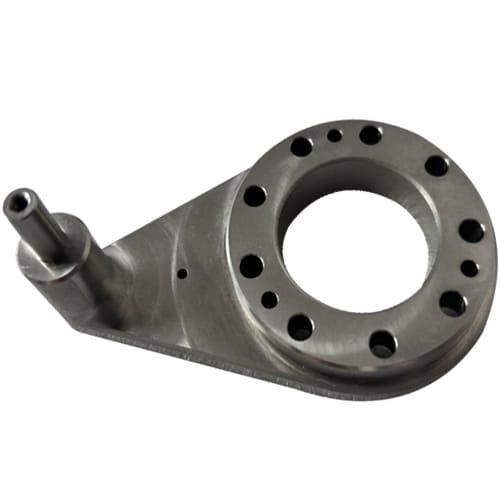
A titanium impeller is a functional shape, not just a titanium blank. Blade angle, outer diameter, hub bore, keyway, thickness, and mounting features should be clearly shown in drawings or 3D models.
If the part replaces an existing component, send photos and measurements. This helps the supplier understand wear areas, assembly interfaces, and whether the new titanium impeller needs dimensional changes.
| Selection Point | What to Specify | Why It Matters |
|---|---|---|
| Media exposure | Liquid chemistry, temperature, solids, cleaning | Guides grade and surface requirements |
| Geometry | Blade shape, hub size, balance, holes | Controls machining and performance fit |
| Manufacturing | Casting, forging, machining, or custom route | Affects precision, cost, and lead time |
| Inspection | Dimensions, balance, surface, certificate | Supports reliable equipment assembly |
Choose the Grade and Manufacturing Route
Grade selection depends on corrosion resistance, strength, and machining needs. Commercially pure titanium may be suitable for corrosion-focused applications, while titanium alloy may be selected when higher strength is required.
Manufacturing may involve blank preparation, CNC machining, forming, finishing, and inspection. A complex titanium impeller should be reviewed for tool access, wall thickness, and risk of deformation during machining.
Control Surface Finish and Balance
Surface finish can affect flow, cleaning, and long-term operation. Sharp edges, burrs, and rough transitions should be controlled according to the equipment requirement. If balancing is required, the buyer should specify the expected level or inspection method.
A titanium impeller may also need protection during shipping. Blades and machined mounting surfaces should be packed to prevent impact damage.
Inspection and Documentation
Inspection can include dimensions, bore fit, keyway size, blade thickness, surface condition, and material certificates. For rotating equipment, balance-related requirements should be discussed early.
Clear documentation helps the maintenance or assembly team confirm that the titanium impeller matches the intended equipment before installation.
What to Send for a Quote
A complete inquiry includes drawings, 3D model, material grade, quantity, media details, operating conditions, surface finish, balance needs, inspection documents, and packaging requirements.
Good technical communication helps the supplier quote a titanium impeller based on real manufacturing requirements rather than a rough photo or incomplete dimension list.
Related product references: review Titanium Alloy Impeller and Custom Irregular Titanium Parts for product details that match this topic.
For quotation accuracy, include drawings, grade, size, tolerance, surface finish, quantity, and application notes when discussing titanium impeller with the supplier.
A practical titanium impeller specification should connect material choice with the working environment, assembly method, inspection documents, and packaging expectations.
When comparing options, buyers should evaluate titanium impeller by performance requirements first, then confirm manufacturing route, documentation, and delivery details.
Additional specification note 4: confirm drawings, quantity, inspection documents, and packaging instructions before approving the titanium impeller order.