Table of Contents
- Why Fastener Material Matters
- Choose Bolts, Screws, Nuts, and Washers as a System
- Define Thread and Dimensional Requirements
- Consider Galling, Friction, and Assembly Practice
- Check Inspection and Traceability Needs
- Information Needed for an Accurate Quotation
Titanium fasteners are often selected when ordinary steel or stainless fasteners cannot provide the right balance of corrosion resistance, weight reduction, and long service life. In marine equipment, chemical systems, outdoor structures, and high-end machinery, bolts, nuts, screws, and washers may be small components, but they can decide whether an assembly stays reliable.
This guide explains how buyers can specify titanium fasteners more clearly. It covers material choice, thread details, surface finish, inspection, and the information a supplier needs before quotation.
Why Fastener Material Matters
Fasteners sit at joints where stress, moisture, chemicals, and movement often concentrate. Titanium fasteners are useful in seawater exposure, chloride environments, humid outdoor equipment, chemical processing fixtures, and weight-sensitive assemblies. Their corrosion resistance can reduce maintenance problems where conventional fasteners may rust or seize.
Titanium fasteners should still be chosen according to the application, not by name alone. Load, mating material, thread engagement, temperature, vibration, and maintenance access should all be reviewed before the final grade and design are confirmed.
Choose Bolts, Screws, Nuts, and Washers as a System
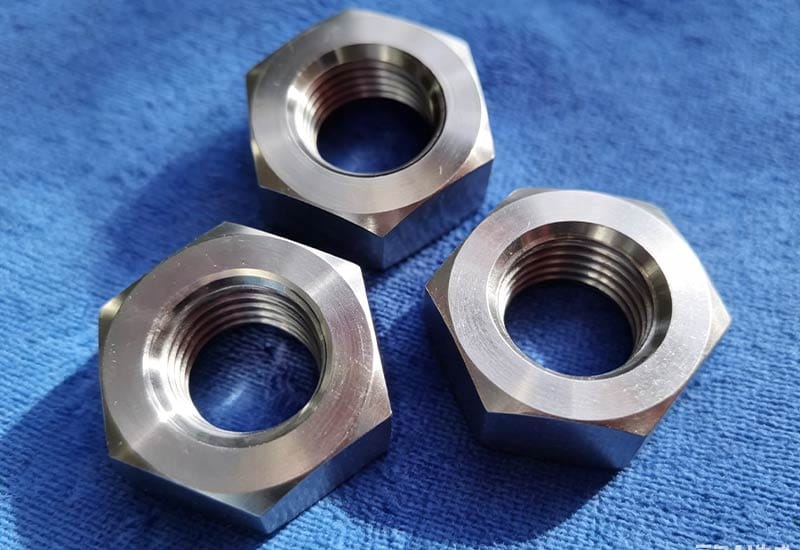
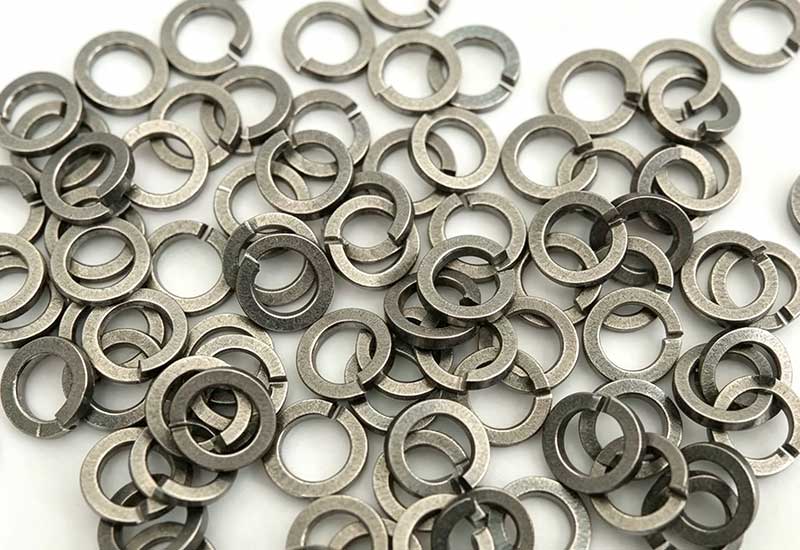
A fastening joint is more than one part. Titanium fasteners may include bolts, nuts, screws, studs, flat washers, spring washers, gaskets, or non-standard pieces made to drawings. If only one component is specified, the complete joint may still fail to assemble smoothly.
For example, a titanium bolt may need a matching titanium nut and washer to control corrosion behavior and prevent mixed-material issues. When requesting titanium fasteners, provide the full assembly requirement if possible.
Define Thread and Dimensional Requirements
Thread size, pitch, thread length, shank length, head height, and tolerance class should be clearly stated. Titanium fasteners used in equipment frames or pipe systems may need stronger load-bearing geometry than small precision screws. Non-standard lengths or head shapes should be supported by drawings.
If the project follows common fastener standards, include the standard number and any custom changes. For general background on screw threads, the screw thread overview on Wikipedia can help non-specialist buyers understand basic thread terminology.
Consider Galling, Friction, and Assembly Practice
Titanium can behave differently from steel during threaded assembly. In some conditions, thread friction or galling risk should be considered. The correct surface finish, mating material, lubrication practice, and tightening method can improve assembly reliability.
Buyers should tell the supplier whether titanium fasteners will be repeatedly assembled, exposed to vibration, or used in a clean environment. These details help determine whether polished surfaces, special thread control, or additional inspection should be requested.
| Decision Area | What to Check | Why It Matters |
|---|---|---|
| Thread size | Diameter, pitch, length, full or partial thread | Controls assembly fit and load transfer |
| Head type | Hex, socket, flange, cap, or custom design | Affects installation access and tool choice |
| Surface finish | Machined, polished, passivated, or customized | Influences handling, friction, and appearance |
| Documents | Material certificate and inspection report | Supports traceability and incoming inspection |
Check Inspection and Traceability Needs
For simple equipment, dimensional checks may be enough. For marine, chemical, medical-related, or aerospace-related assemblies, titanium fasteners may require material certificates, thread inspection, surface inspection, and batch traceability. The inspection level should match the risk of the application.
Packaging is also important. Small titanium fasteners should be separated by size and grade, with clear labels for incoming inspection. Precision or polished parts should be protected from scratches and contamination during shipping.
Information Needed for an Accurate Quotation
A useful inquiry includes product type, titanium grade, size, thread, standard, quantity, surface finish, drawing, application, and required documents. If the exact grade is not fixed, describe the working environment and load condition so the supplier can recommend a suitable material.
Well-defined titanium fasteners save time in purchasing and reduce the risk of mismatched components. For custom orders, a drawing or sample is the best way to confirm dimensions before production starts.
Procurement Checklist for Better Results
Before purchasing titanium fasteners, prepare a complete list of bolt, nut, screw, washer, and gasket requirements. Many delays happen because one matching part is missing from the inquiry, even though the main bolt or screw was specified correctly.
Confirm the thread standard, material grade, surface finish, and assembly environment. Titanium fasteners used near seawater, chemical media, or outdoor structures should be reviewed as a joint system, not as isolated small parts. If repeated assembly is expected, tell the supplier so thread finish and packaging can be considered.
Incoming inspection is easier when titanium fasteners are packed by size and batch. Clear labels, material certificates, and basic dimensional reports help the receiving team avoid mixing similar parts.
For matching fastening parts, review Custom Titanium Bolt and Custom Titanium Nuts for product specifications that match this topic.
Additional Planning Notes
For repeat purchasing, keep approved drawings, inspection notes, packaging labels, and previous order feedback in one file. This gives the supplier a stable reference and helps the purchasing team compare future batches without relying on memory or scattered email details.