Table of Contents
- Understand the Fluid and Service Conditions
- Match the Fitting Type to the Piping Layout
- Choose a Suitable Titanium Grade
- Check Dimensional Accuracy and Surface Quality
- Plan Welding and Assembly Requirements
- What to Send When Requesting a Quote
Selecting titanium pipe fittings is a practical engineering decision, not only a material preference. In chemical plants, seawater systems, desalination equipment, heat exchangers, and marine projects, the fitting is often the point where flow direction, stress, and corrosion risk meet. A clear specification helps buyers avoid leaks, premature corrosion, and installation problems.
This article explains how to choose titanium pipe fittings for corrosive fluid systems. It focuses on application conditions, material grade, fitting type, inspection, and quotation details so that engineers and purchasing teams can communicate requirements more clearly before placing an order.
Understand the Fluid and Service Conditions
The first step is to define the media flowing through the system. Titanium pipe fittings are commonly selected for seawater, chloride-containing liquids, certain acidic media, and high-humidity industrial environments. The same fitting can perform differently when temperature, concentration, flow speed, and cleaning cycles change, so these details should be shared with the supplier.
For general background on titanium as a corrosion-resistant metal, the titanium overview on Wikipedia is a useful reference. In procurement, however, titanium pipe fittings should always be reviewed against the actual working environment rather than selected from material reputation alone.
Match the Fitting Type to the Piping Layout
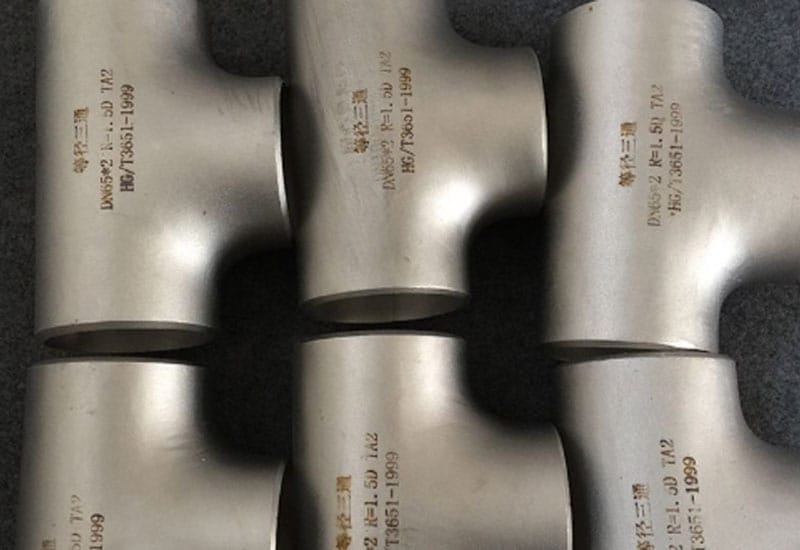
Different titanium pipe fittings solve different layout problems. Elbows change flow direction, tees split or combine lines, flanges support removable connections, caps close pipe ends, and stub ends help connect flanged piping assemblies. Choosing the right type early prevents unnecessary welding, rework, and stress concentration during installation.
Buyers should provide the pipe outside diameter, wall thickness, connection method, drawing standard, and installation space. If the system has vibration or thermal movement, titanium pipe fittings may also need additional attention to alignment and support design.
Choose a Suitable Titanium Grade
Commercially pure titanium grades are often used when corrosion resistance and formability are more important than very high strength. Titanium alloy grades may be considered when higher mechanical performance is required. Titanium pipe fittings for chemical and marine service are frequently specified by grade, size, wall thickness, and applicable material standard.
When a recognized standard is required, include it directly in the inquiry. Standards such as ASTM B363 are often referenced for titanium and titanium alloy seamless and welded fittings. The standard reference helps align material, dimensional, and documentation expectations.
Check Dimensional Accuracy and Surface Quality
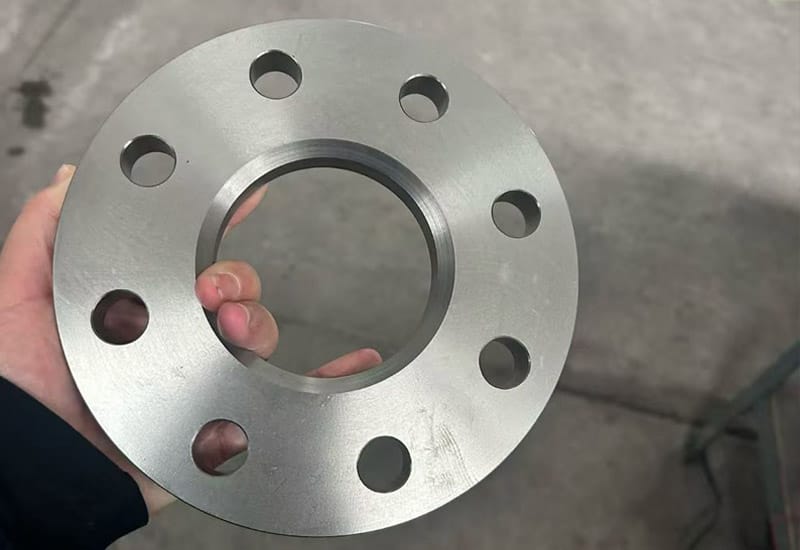
Even when the material is correct, poor dimensions can make titanium pipe fittings difficult to install. Key checks include end diameter, wall thickness, bend angle, face flatness, bolt hole position, sealing surface condition, and weld preparation. These details directly affect fit, sealing, and assembly time.
Surface quality also matters in corrosive fluid systems. Deep scratches, contamination, or rough sealing faces may create weak points. Titanium pipe fittings should be handled and packaged so that machined faces and sealing areas remain protected before installation.
| Decision Area | What to Check | Why It Matters |
|---|---|---|
| Fluid media | Chlorides, acids, seawater, cleaning agents | Corrosion behavior depends on chemistry and temperature |
| Connection type | Flange, elbow, tee, cross, cap, or stub end | Correct geometry reduces installation stress |
| Material grade | Pure titanium or titanium alloy | Grade affects corrosion resistance and strength |
| Inspection | Dimensions, surface, wall thickness, certificates | Documentation supports reliable procurement |
Plan Welding and Assembly Requirements
If the project requires welding, the supplier should know whether fittings will be welded in a shop or at the installation site. Titanium requires clean handling and suitable shielding during welding. Even a well-made fitting can be compromised if assembly conditions are poorly controlled.
For flanged titanium pipe fittings, bolt material, gasket type, tightening sequence, and mating flange condition should be considered. In mixed-material systems, galvanic interaction and maintenance access should also be reviewed before finalizing the design.
What to Send When Requesting a Quote
A complete inquiry for titanium pipe fittings should include fitting type, size, wall thickness, grade, standard, quantity, drawing, working media, temperature, pressure, and inspection requirements. If the exact standard is uncertain, provide the application details and ask the supplier to recommend a practical route.
Clear communication reduces delays and avoids mismatched parts. For demanding projects, it is better to confirm material certificates, dimensional reports, packaging, and delivery sequence before production begins. This gives both the buyer and manufacturer a shared basis for evaluating titanium pipe fittings.
Procurement Checklist for Better Results
Before ordering titanium pipe fittings, confirm whether the system is new construction, repair work, or a replacement project. Replacement work often needs extra attention to flange face condition, existing pipe dimensions, and installation space, while new construction may allow better optimization of fitting geometry.
Ask the supplier to review drawings together with working media, pressure, and temperature. This helps titanium pipe fittings match both the layout and the service environment. If the project includes elbows, tees, flanges, and caps together, request a grouped quotation so material grade and documentation remain consistent.
A final check should include packaging and labeling. Titanium pipe fittings for different lines or sizes should be marked clearly, especially when several dimensions are shipped in the same batch.
For related piping components, review Titanium Pipe Elbows and Titanium Flange for product specifications that match this topic.