Tabla de contenidos
Una tabla de cortar de titanio ya no es sólo un artículo de cocina especializado. Ahora lo buscan cocineros caseros, compradores de equipos para actividades al aire libre, marcas de regalos, mayoristas y equipos de productos de marca privada que desean una superficie de preparación más limpia y duradera. El atractivo es fácil de entender: el titanio es liviano para un metal, resistente a la corrosión, no poroso y visualmente premium. Aún así, una tabla de cortar de titanio no es la respuesta correcta para cada tarea de corte, y los compradores serios deben comprender tanto las ventajas como las compensaciones antes de realizar un pedido.
Esta guía explica cómo funciona el tablero, qué verificar antes de obtenerlo, cómo se compara con la madera, el plástico, el bambú y el acero inoxidable, y qué detalles de personalización importan para las marcas. El objetivo es práctico: ayudarle a evaluar si este material se adapta a su línea de productos, posicionamiento minorista o escenario de uso de la cocina sin depender de afirmaciones exageradas.
¿qué es una tabla de cortar de titanio?
Una tabla de cortar de titanio es una tabla plana para preparar alimentos hecha de titanio o una aleación de titanio en lugar de materiales tradicionales como madera, bambú, plástico, vidrio o acero inoxidable. Para productos de cocina y exteriores, los fabricantes suelen centrarse en tablas delgadas y duraderas con una superficie lisa, bordes redondeados y acabados superficiales opcionales. Puede venderse como una herramienta de cocina doméstica premium, un accesorio para acampar, una tabla de preparación para viajes o un producto de regalo de marca privada.
La historia principal del material es la superficie estable de óxido del titanio. La investigación sobre el titanio como biomaterial a menudo destaca su resistencia a la corrosión y su película superficial pasiva, lo que ayuda a explicar por qué el material se usa ampliamente en aplicaciones exigentes. Eso no significa que cada tabla sea automáticamente adecuada para cada cocina; Aún es necesario comprobar cuidadosamente la calidad del contacto con los alimentos, el acabado de la superficie, el tratamiento de los bordes y las instrucciones de limpieza.
Por qué los compradores lo buscan
La demanda de búsqueda ha crecido porque los compradores buscan alternativas a las tablas que manchan, absorben olores, deforman o necesitan reemplazo frecuente. Una tabla de cortar de titanio responde a varias preocupaciones reales: higiene, durabilidad, fácil limpieza, resistencia a la corrosión y una apariencia limpia y moderna. Para las marcas, estos son puntos de venta útiles porque son fáciles de entender para los consumidores.
Al mismo tiempo, la categoría ha atraído un marketing agresivo. Los compradores deben tener cuidado con afirmaciones como “perfecto”, “nunca daña los cuchillos” o “garantizado más seguro.” Una página de producto creíble debe explicar la calidad del material, el espesor, el acabado de la superficie, el diseño de los bordes, el método de limpieza y el uso previsto en lugar de confiar en promesas amplias.
Beneficios clave de una tabla de cortar de titanio
La razón más importante para elegir una tabla de cortar de titanio es la durabilidad de bajo mantenimiento. El titanio resiste el óxido y la corrosión mejor que muchos metales comunes, por lo que puede soportar ambientes de cocina húmedos, preparación de mariscos, uso al aire libre y lavado frecuente. Tampoco absorbe agua como lo hacen la madera o el bambú, lo que ayuda a reducir la retención de olores y los problemas de hinchazón.
Una tabla de cortar de titanio también tiene un aspecto minimalista y premium. Eso es importante para marcas minoristas y productos de regalo, especialmente cuando la tabla se combina con marcas láser, opciones de tamaño personalizadas, empaques de marca o un juego de vajillas de titanio a juego. Para las marcas de exterior, la combinación de peso ligero, resistencia y resistencia a la corrosión puede resultar más atractiva que el acero inoxidable pesado.
La limpieza es otra ventaja. Las autoridades de seguridad alimentaria como el USDA recomiendan lavar las tablas de cortar con agua caliente y jabón después de su uso y separar las tablas para carne cruda, mariscos, productos agrícolas y pan para reducir la contaminación cruzada. Una tabla no porosa no sustituye a una limpieza correcta, pero puede simplificar el lavado y secado de rutina.
Limitaciones que los compradores deben comprender
Una tabla de cortar de titanio es más dura que la madera o muchos plásticos. Esa firmeza es útil para la durabilidad, pero puede resultar menos indulgente con un cuchillo. Los usuarios pueden notar más sonido, menos agarre en la superficie y un desgaste más rápido de los bordes en comparación con superficies de corte más suaves. Por esta razón, a menudo se posiciona mejor como una tabla de preparación higiénica y fácil de limpiar en lugar de la única tabla que un cocinero serio necesitará.
El acabado de la superficie también importa. Una superficie muy lisa puede ser fácil de limpiar, pero resbaladiza con alimentos húmedos. Un acabado texturizado o cepillado puede mejorar el manejo, aunque aún así debería ser fácil de limpiar. Los bordes deben redondearse o desbarbarse para que la tabla se sienta segura en la mano y no dañe el embalaje, las encimeras ni las bolsas de almacenamiento.
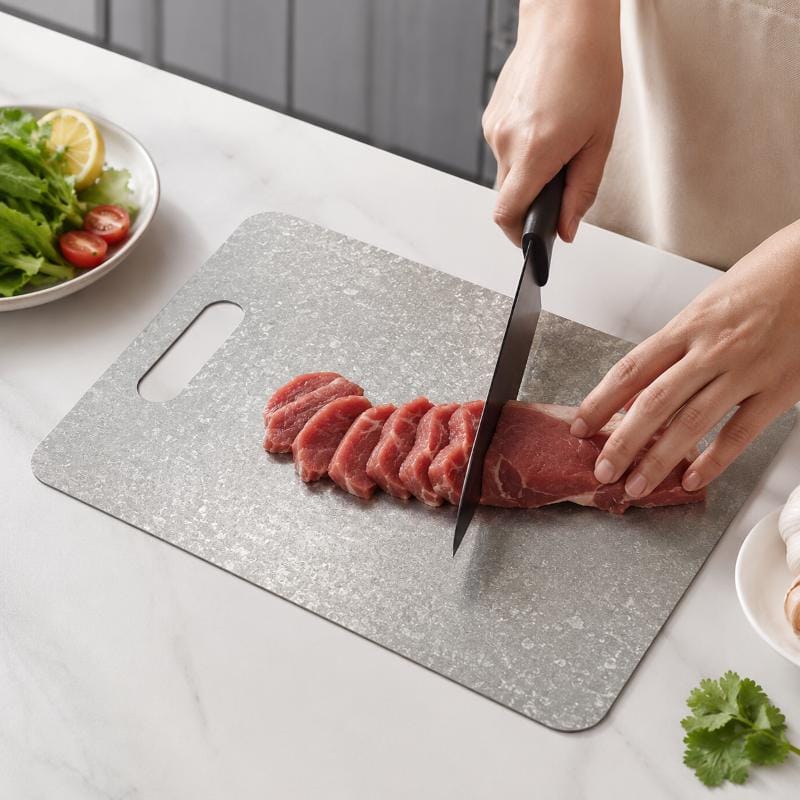
Tabla de cortar de titanio versus otros materiales
| Material | Fuerza principal | Limitación principal | Mejor uso |
|---|---|---|---|
| Titanio | Durable, no poroso, resistente a la corrosión | Sensación más dura bajo los cuchillos | Preparación limpia, mariscos, exterior, productos premium |
| Madera | Sensación de corte cómoda | Necesita secado y mantenimiento | Picado y presentación diaria |
| Plástico | Asequible y fácil de reemplazar | Puede cicatrizar y desgastarse con el tiempo | Sistemas de cocina codificados por colores |
| Bambú | Aspecto ligero y natural | Puede ser difícil y necesita atención | Cocinas caseras y juegos de regalo |
| Acero inoxidable | Fuerte y familiar en entornos comerciales | Más pesado y puede sentirse duro | Superficies de trabajo resistentes |
Esta comparación muestra por qué el producto debe venderse con una guía de uso clara. No es simplemente “mejor” que cualquier otro material. Es mejor para compradores que valoran la resistencia a la corrosión, la fácil limpieza, el diseño moderno y la larga vida útil del producto. Puede ser menos adecuado para usuarios que desean una superficie de corte tradicional, suave y silenciosa.
Cómo evaluar materiales y construcción
Al adquirir una tabla de cortar de titanio, comience con las especificaciones del material. Pregunte si el producto utiliza titanio comercialmente puro o una aleación de titanio, qué espesor hay disponible y si el material es adecuado para aplicaciones de contacto con alimentos en su mercado objetivo. No confíe únicamente en la apariencia, porque el color y el pulido de la superficie no demuestran la calidad del material.
A continuación, revise los detalles de construcción. Un tablero de calidad debe tener una planitud constante, bordes lisos, esquinas estables y un acabado que coincida con el uso previsto. Si el tablero está diseñado para el comercio minorista, la protección del embalaje es importante porque un tablero de metal puede rayarse contra otros productos durante el envío. Si el tablero está diseñado para acampar o viajar, el peso y la comodidad de las esquinas se vuelven más importantes.
Opciones de personalización para marcas
Para proyectos de marca mayorista y privada, una tabla de cortar de titanio se puede personalizar de varias maneras prácticas. Las opciones comunes incluyen dimensiones personalizadas, selección de espesor, acabado superficial cepillado o molido con agua, acabado con flores de hielo, radio de esquina, orificio para colgar, detalles antideslizantes, marcado de logotipo y embalaje de marca. Estas opciones afectan tanto la experiencia del usuario como el valor percibido.
Antes de confirmar un pedido personalizado de tabla de cortar de titanio, prepare una hoja de especificaciones simple. Incluya el tamaño objetivo, el grosor, el acabado de la superficie, el tratamiento de los bordes, la cantidad, el método del logotipo, el estilo de empaque y el mercado previsto. Si el producto se venderá como parte de un juego de cocina, confirme si debe coincidir con palillos, pajitas, cubiertos o utensilios de cocina de titanio en lenguaje de acabado y empaque.
Cuidado, limpieza y uso seguro
Una tabla de cortar de titanio es fácil de limpiar, pero aún necesita hábitos adecuados de seguridad alimentaria. Lávelo después de cada uso, séquelo antes de guardarlo y use superficies separadas para carne cruda o marisco y alimentos listos para comer cuando sea posible. La FDA también hace hincapié en lavar superficies y utensilios de cocina porque los patógenos invisibles pueden propagarse a través de tablas de cortar, cuchillos, encimeras y alimentos.
Evite el uso de abrasivos fuertes a menos que el proveedor confirme que son adecuados para el acabado. Pueden aparecer marcas de luz de cuchillos con el uso; Esto es normal en muchas superficies de corte y debe explicarse honestamente en las instrucciones del producto. Si el tablero se comercializa para la limpieza de lavavajillas, el proveedor debe confirmar que el acabado, el logotipo y las instrucciones de embalaje respaldan esa afirmación.
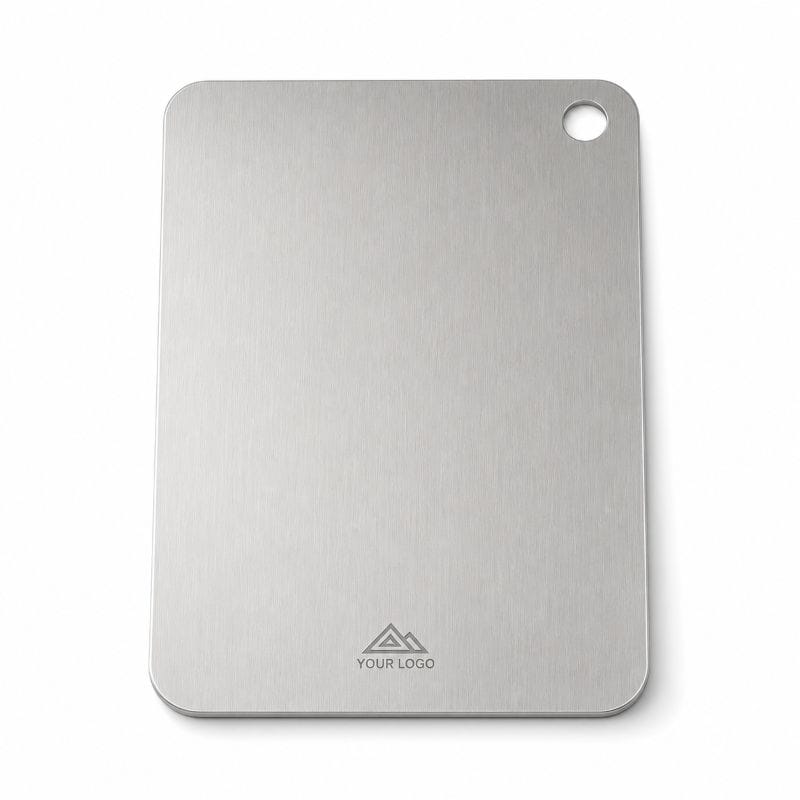
¿quién debería considerar una tabla de cortar de titanio?
Una tabla de cortar de titanio es una opción sólida para los compradores de productos que sirven cocinas modernas, cocina al aire libre, viajes, campamentos, preparación de mariscos, regalos de primera calidad y productos de estilo de vida reutilizables. También funciona bien para marcas que desean una historia de materiales distintiva sin ingresar a una categoría abarrotada de plástico o bambú de bajo costo.
Puede que no sea el producto líder ideal para los clientes que más se preocupan por el corte silencioso, el contacto suave con el cuchillo o la sensación tradicional de la madera. En esos casos, la posición importa. El tablero puede enmarcarse como una superficie de preparación limpia, duradera y fácil de lavar, mientras que la madera o los tableros más blandos siguen siendo útiles para largas sesiones de corte.
Preguntas que debe hacerse antes de abastecerse
- ¿Qué grado de titanio o especificación de material se utiliza?
- ¿Qué espesores y tamaños están disponibles para la producción?
- ¿Se pueden personalizar el acabado de la superficie, el logotipo y el embalaje?
- ¿los bordes son redondeados y cómodos para el manejo diario?
- ¿Qué instrucciones de limpieza deben imprimirse para los usuarios finales?
- ¿Se pueden comprobar las muestras antes de la producción a granel?
- ¿Qué artículos de inspección se incluyen antes del envío?
Estas preguntas mantienen práctico el proceso de compra. Este es un producto basado en materiales, por lo que pequeños detalles como el acabado, la planitud, la calidad de los bordes y el embalaje pueden decidir si el producto final se siente premium o sin terminar.
Recursos internos para compradores
Para obtener detalles del producto, consulte el tablero de corte de titanio personalizable página. Para obtener soporte más amplio para OEM y ODM, revise productos de titanio personalizados.
Referencias externas útiles
- Guía del USDA sobre limpieza de tablas de cortar y contaminación cruzada
- Revisión de la investigación sobre el comportamiento de la superficie del titanio, la resistencia a la corrosión y la biocompatibilidad
Preguntas frecuentes
¿Es buena una tabla de cortar de titanio para el uso diario en la cocina?
Una tabla de cortar de titanio puede ser buena para la preparación diaria cuando el comprador valora una fácil limpieza, resistencia a la corrosión y una superficie no porosa. Para cortes intensos o usuarios que prefieren una sensación de corte suave, puede funcionar mejor como placa secundaria.
¿una tabla de cortar de titanio embota los cuchillos?
Una tabla de cortar de titanio es más dura que la madera y muchos plásticos, por lo que los bordes de los cuchillos pueden necesitar un mantenimiento más frecuente dependiendo del acero del cuchillo, la presión de corte y la técnica. Esto debe explicarse claramente en las instrucciones del producto.
¿Se puede personalizar una tabla de cortar de titanio?
Sí. Una tabla de cortar de titanio generalmente se puede personalizar por tamaño, grosor, acabado, forma de esquina, marcado del logotipo y empaque. Las opciones exactas dependen del equipo de producción y los requisitos de pedido.
¿es el titanio mejor que el acero inoxidable para tablas de cortar?
El titanio es más ligero y altamente resistente a la corrosión, mientras que el acero inoxidable es familiar y resistente. La mejor opción depende de la posición del producto, el peso objetivo, la sensación de la superficie y las expectativas del comprador.
¿Qué deben comprobar las marcas antes de realizar el pedido?
Las marcas deben verificar las especificaciones del material, el acabado de la superficie, el tratamiento de los bordes, la calidad de las muestras, el embalaje, las instrucciones de limpieza y los estándares de inspección antes de pedir una tabla de cortar de titanio a granel.
Solicite una muestra de tabla de cortar de titanio personalizada
Si está desarrollando una línea de productos de utensilios de cocina, exteriores, de regalo o de marca privada, Xinfengda puede respaldar la producción personalizada de tablas de cortar de titanio según sus dibujos, tamaño objetivo, acabado de superficie, logotipo y necesidades de empaque. Comparta los requisitos de su producto para analizar muestreos, opciones de materiales y detalles de fabricación OEM u ODM.