
جدول المحتويات
A titanium glasses frame project needs a clear answer to one engineering question: hinges, nose pads and mixed materials. For buyers working on eyewear brand and distributor sourcing, the important details are hinges, bridge geometry and lens-retention interfaces. The purchase decision should connect those features to the final part condition and the evidence required for acceptance. This guide develops a practical review of a titanium glasses frame, with attention to a mixed-material joint that loosens during repeated movement. It identifies the questions to resolve with the designer and supplier before a quotation becomes a production commitment.
Identify titanium and non-titanium parts explicitly
For a titanium glasses frame, eyewear can contain a titanium frame structure alongside hinges, screws, pads, coatings and other materials. State the material scope rather than implying that every element is titanium. Review hinge axes, lens retention and repeated movement with the assembly designer. Appearance references should be controlled separately from functional fit. A coating colour cannot demonstrate composition or skin-contact conformity. The brand should define relevant product tests and evidence for its market, while the supplier reports the material and manufacturing scope actually included in the order.
Review the mating system, not the component alone for a titanium glasses frame
The assembly behaviour of titanium glasses frame depends on the neighbouring parts, contact surfaces and installation sequence. Start with hinges, bridge geometry and lens-retention interfaces and identify the mating drawing revisions. Review clearance, engagement, support and access for tools or inspection. A dimension that passes on the individual part can still produce an unsuitable stack-up when combined with other tolerances.
Ask the designer to define the functional requirement and the datum relationship. Include different materials, coatings and temperatures where relevant. The assembly plan should explain how a mixed-material joint that loosens during repeated movement will be detected before the complete equipment is released. The titanium glasses frame review should identify which of these requirements is controlled by the drawing and which needs a separate process agreement.
Separate fit, friction and sealing requirements for a titanium glasses frame
For a titanium glasses frame, a good geometric fit does not establish an acceptable friction or sealing condition. Define the role of each contact: location, load transfer, movement or fluid containment. Discuss surface texture, cleanliness and any approved lubricant or barrier with the application engineer. Do not select a torque, interference or gasket arrangement from a material name alone.
The installation procedure must reflect the actual joint. Where the lens-centre reference and hinge axes controls fit, verify it in the condition used for assembly. Keep any special assembly material compatible with the service environment and the required cleanliness or product-contact obligations. A useful titanium glasses frame proposal makes the remaining technical questions visible before tooling or material is committed.
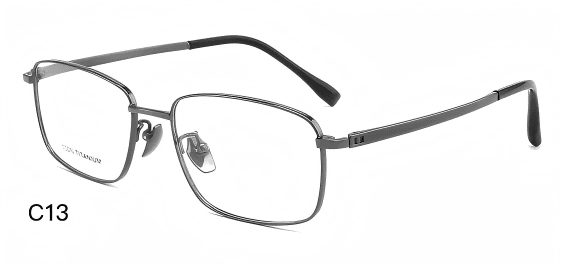
Use a representative joint or interface trial for a titanium glasses frame
A trial for a titanium glasses frame should include the actual mating geometry and a realistic assembly sequence. Request an assembly-fit review and defined durability testing, and define which observations establish acceptance. Fit, leakage, operating movement and repeated disassembly are different questions and may require different checks. Record installation conditions so the result can be reproduced.
If the trial uses a substitute mating part, explain which features it represents and which uncertainties remain. Avoid hand fitting that makes the sample work while leaving production tolerances unresolved. A successful trial should demonstrate the proposed controlled process rather than the skill of one assembler. For a titanium glasses frame, link the chosen method to the lens-centre reference and hinge axes so the result can be interpreted against the functional requirement.
Write the installation boundary into the supply agreement for a titanium glasses frame
State whether the supplier delivers titanium glasses frame as an inspected component, a matched set or a tested assembly. Identify who supplies mating hardware, seals and installation instructions. Agree protection for contact surfaces during shipping and storage, and define incoming checks before assembly. Include any limits on approved rework or reuse in the relevant technical documents.
If the customer changes the mating design, review whether the earlier evidence still applies. A clear boundary prevents the part supplier's dimensional acceptance from being confused with approval of a complete system that the supplier has neither assembled nor tested. Keep the titanium glasses frame release criteria in the same technical package as the route and the required inspection records.
Match examination coverage to the defect being sought for a titanium glasses frame
For a titanium glasses frame, surface and internal examinations need a stated purpose and an agreed procedure. A surface method does not establish the absence of every internal discontinuity, and a volumetric method has limitations linked to geometry and access. The responsible engineer should choose the examination and acceptance criteria for the actual product form. Request an assembly-fit review and defined durability testing when it resolves the project risk.
Identify the inspected locations, coverage and any unexamined areas in the record. Do not convert a general statement such as NDT available into a claim that the shipped component was fully examined and accepted. In a titanium glasses frame enquiry, ask how an assembly-fit review and defined durability testing will be recorded and related to the delivered lot.
Make the report useful at incoming inspection for a titanium glasses frame
A titanium glasses frame inspection report should link the part and lot to the drawing revision, instrument or procedure, measured results and approved deviations. Photographs can help identify locations but should not replace numerical results where a dimension is specified. Include the state of the part when measured and the stage at which the check was performed.
Agree how the buyer will verify representative features on receipt. If a result is borderline, resolve the method and uncertainty before shipment. Clear records reduce disputes and allow a future engineering team to understand the acceptance decision without relying on the original inspector. The titanium glasses frame acceptance discussion should address a mixed-material joint that loosens during repeated movement without relying on a generic capability statement.
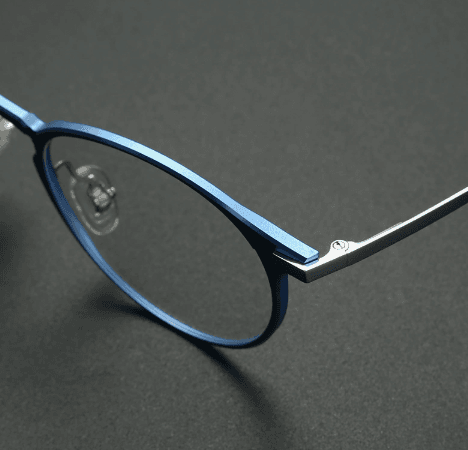
حجم وشكل واتجاه وموقع منفصل
For a titanium glasses frame, a nominal diameter or thickness does not describe every requirement. Review the size of each feature, its form, its orientation and its position relative to the assembly. The relevant details are hinges, bridge geometry and lens-retention interfaces. A part may meet size limits while failing its locating or sealing function. Define the functional datum scheme before choosing measurement methods.
Avoid adding tight limits everywhere without a reason; focus on the features that affect the required behaviour. A clear drawing should show how the lens-centre reference and hinge axes establishes the reference and which variations are acceptable within that reference system. For a titanium glasses frame, confirm that the proposed controls still apply after the last machining, joining or finishing operation.
تحديد شرط القياس للهندسة المرنة
A thin or slender titanium glasses frame component may move under its own weight, clamp force or probe contact. State whether acceptance is in the free state or under a defined restraint. Include support locations and any prescribed gauge length. A best-fit surface report may conceal a functional position error if the required datums are ignored.
Review the method with the inspection team and check that the equipment can resolve the tolerance. The point is to distinguish real manufacturing variation from a measurement setup that changes the part, especially when evaluating a mixed-material joint that loosens during repeated movement. Use the titanium glasses frame trial to settle hinges, nose pads and mixed materials and retain the approved result for repeat production.
تطبيق المراجعة على المكون المرفق
For this titanium glasses frame enquiry, translate hinges, nose pads and mixed materials into the purchase package. The supplier needs to know which final surfaces carry the requirement and which operations the customer will perform after delivery. Identify the lens-centre reference and hinge axes on the drawing, and connect the inspection locations to hinges, bridge geometry and lens-retention interfaces. Ask the bidder to describe the offered route, delivered condition and any subcontracted steps.
Define which frame components are titanium and whether coatings or other metals are present. A titanium label does not prove every part has the same composition. A useful quotation states what evidence is included and what remains an engineering decision. Resolve the proposed treatment of a mixed-material joint that loosens during repeated movement before accepting a route that cannot be verified at the intended release stage.
العمل من خلال مثال التخطيط
Consider a hypothetical titanium glasses frame development order for eyewear brand and distributor sourcing. The first quotation describes the nominal outline and material but leaves the inspection state undefined. During the review, the buyer highlights hinges, bridge geometry and lens-retention interfaces and asks for an assembly-fit review and defined durability testing.
The supplier then identifies the operations that establish the lens-centre reference and hinge axes, the point where those features will be measured and the records supplied with the trial. The designer reviews any differences from the intended final condition before approving the route. This is a planning example, not a reported customer result. Its purpose is to show how a specific question about hinges, nose pads and mixed materials becomes an inspectable requirement rather than an assumption carried into production.
قارن الأدلة قبل قبول العرض
Use the following comparison for titanium glasses frame. The stronger evidence column describes the information to request; it does not claim that every supplier already provides it. Select the extent of testing from the component risk, applicable specification and agreed supply scope.
| مراجعة البند | عرض غير مكتمل | الأدلة للطلب |
|---|---|---|
| التركيز الفني | Hinges, nose pads and mixed materials mentioned only as a capability | Hinges, nose pads and mixed materials resolved in the drawing and process review |
| الميزات الحرجة | المغلف الاسمي فقط | hinges, bridge geometry and lens-retention interfaces identified on the inspection plan |
| تحديد موقع المرجع | إعداد المتجر ترك غير محدد | the lens-centre reference and hinge axes linked to the functional drawing |
| الحالة المادية | اسم سبيكة بدون أساس شكل المنتج | Define which frame components are titanium and whether coatings or other metals are present. A titanium label does not prove every part has the same composition. |
| قبول | بيان عام تم فحصه أو اعتماده | an assembly-fit review and defined durability testing with method, stage, results and criteria |
| الخطر الرئيسي | وعد أداء غير مشروط | A documented plan addressing a mixed-material joint that loosens during repeated movement |
| كرر الإنتاج | انسخ العينة السابقة | المراجعات الخاضعة للرقابة وهوية الدفعة وإخطار التغيير |
Prepare the technical enquiry for a titanium glasses frame
For a useful titanium glasses frame quotation, send the controlled drawing and model, quantity, intended application, alloy and condition requirements, finished or semi-finished supply boundary, and any project-specific standard. State hinges, nose pads and mixed materials as the main review question. Mark the lens-centre reference and hinge axes, the critical surfaces and the inspection stage.
Request a route proposal that explains hinges, bridge geometry and lens-retention interfaces and includes an assembly-fit review and defined durability testing. Ask bidders to separate included work from optional tests, tooling and subsequent customer operations. Keep assumptions and exceptions visible in the offer. Confirm the latest files before a trial or repeat order, and retain the resulting technical decisions with the part revision.
للحصول على خلفية مستقلة، راجع الجمعية الملكية للكيمياء مرجع التيتانيوم. يوفر هذا المرجع سياقًا للمناقشة الفنية؛ لا يصدق على Xinfeng Dingyuan أو يوضح أداء مكون معين تم توفيره. حدد المتطلبات المعمول بها للمنتج والمشروع الفعليين.
ناقش المكون مع Xinfeng Dingyuan
مراجعة نظارات تيتانيوم نطاق المنتج والمتوفر خدمات تصنيع التيتانيوم المخصصة. For a titanium glasses frame enquiry, share the drawing, material condition, quantity and the acceptance issue described above. Ask the team to confirm the offered route and documentation for your specific project. Use the enquiry form below or the صفحة الاتصال لبدء المراجعة الفنية.
الأسئلة المتداولة
What is the main review question for a titanium glasses frame?
Clarify hinges, nose pads and mixed materials before production. Identify hinges, bridge geometry and lens-retention interfaces and record the final condition and acceptance basis on the controlled drawing.
Which material details should a titanium glasses frame order contain?
Define which frame components are titanium and whether coatings or other metals are present. A titanium label does not prove every part has the same composition. Retain the connection between the physical material and the relevant heat or lot records.
What acceptance evidence is needed for a titanium glasses frame?
Agree an assembly-fit review and defined durability testing. Record the method, part condition, drawing revision, acceptance criteria and actual results. Add application validation where the component duty requires it.
Does one sample approve future titanium glasses frame production changes?
No. Review changes to material, geometry, fixtures, finishing and inspection against the accepted evidence. Preserve the lens-centre reference and hinge axes and the approved manufacturing scope in repeat orders.
What should be included in a titanium glasses frame enquiry?
Send the drawing and model, alloy and condition requirements, quantity, application, supply boundary and required records. Highlight hinges, nose pads and mixed materials so the supplier can address the specific project question.