جدول المحتويات
A titanium forging project needs a clear answer to one engineering question: casting or forging for a machined blank. For buyers working on load-bearing machined components, the important details are section transitions and grain-flow orientation. The purchase decision should connect those features to the final part condition and the evidence required for acceptance. This guide develops a practical review of titanium forging, with attention to a discontinuity left near the final loaded surface. It identifies the questions to resolve with the designer and supplier before a quotation becomes a production commitment.
Understand the blank and the final load path
For titanium forging, a forging is an intermediate product until the purchase scope says otherwise. Features supplied with scale or rough stock need a defined machining envelope. Grain-flow direction can be relevant to the component, but a buyer should ask for the documented process and acceptance evidence rather than infer it from a forged label. Identify test extensions and any orientation-sensitive requirements before the blank is cut. The useful procurement decision is whether the proposed blank can produce the accepted geometry and properties through the planned conversion route.
Compare manufacturing routes on finished-part requirements for titanium forging
For titanium forging, start with the final component and work backwards to the blank. Casting creates geometry by solidification, forging shapes a solid workpiece, and machining removes stock. They have different tooling commitments, surface conditions and inspection needs. A near-net outline can reduce removal, but it may also introduce a new qualification task. Compare routes using section transitions and grain-flow orientation, the specified alloy condition and access to the final surfaces.
Ask each bidder to mark the features supplied as formed and those supplied fully machined. This makes the route decision visible before a low blank price hides work that your own factory must complete. The titanium forging review should identify which of these requirements is controlled by the drawing and which needs a separate process agreement.
Keep route-specific material evidence separate for titanium forging
The same nominal alloy family does not make cast, forged and wrought material interchangeable. A titanium forging order should name the intended product form, governing specification and required tests. Request the proposed delivery condition and identify any subsequent operation that can change it. For a loaded component, the designer should evaluate the actual geometry and manufacturing history instead of assuming that one process always wins.
Document how the supplier will address a discontinuity left near the final loaded surface. If a different blank route is proposed after quotation, treat it as a technical change with a review of acceptance evidence, rather than a purchasing substitution. A useful titanium forging proposal makes the remaining technical questions visible before tooling or material is committed.
Compare complete conversion cost and qualification effort for titanium forging
Include tooling, machining, yield, inspection, trial parts and approval time in the comparison for titanium forging. A simple one-off may justify readily available stock, while a repeat design may support dedicated tooling. Those are project choices, not universal volume thresholds. Ask for a cost split that distinguishes reusable tooling from per-piece work and identify ownership of fixtures and programmes.
Include the cost of measuring the machining reference faces and conducting a mapped blank inspection and coupon-location review. A route that looks economical at the blank stage can become expensive if an inaccessible feature needs special examination after every machining operation. For titanium forging, link the chosen method to the machining reference faces so the result can be interpreted against the functional requirement.
Release the route only after a representative trial for titanium forging
Approve a route for titanium forging against a representative trial, including the stock removal and finishing expected in production. An attractive sample made through a special route may not demonstrate repeatability. Retain the route revision, material identity, fixture description and actual results, including deviations. Agree which changes require another review: blank source, tooling, heat treatment, major geometry or inspection method may all matter.
Use the trial to answer a concrete question about section transitions and grain-flow orientation. The release record should tell a future buyer why the chosen route was acceptable and what evidence must remain consistent in a repeat order. Keep the titanium forging release criteria in the same technical package as the route and the required inspection records.
Read the material description as a complete designation for titanium forging
For titanium forging, review the alloy name, product form, delivery condition and governing standard as one specification. Similar labels can refer to different product requirements. Confirm the edition required by the contract and resolve any conflict between a drawing note and the quotation. The material note for this component is specific: Choose the specified alloy, forging condition and product standard together. A cast alloy label cannot establish the acceptance basis for a forging.
Ask the supplier to identify the exact offered condition before accepting the order. A certificate should report the supplied material, not simply reproduce a broad catalogue list. Where an alternative designation is proposed, have the responsible engineer verify equivalence for the actual application. In a titanium forging enquiry, ask how a mapped blank inspection and coupon-location review will be recorded and related to the delivered lot.
Link test results to the material that will be machined for titanium forging
A certificate for titanium forging is useful only if its reported heat, lot and condition can be linked to the physical material. Review identifiers on the blank or controlled container and follow any split-lot records. Identify the test specimen location and the manufacturing condition represented by the result. A test on feedstock may not establish every property required after a later operation.
Ask for missing records before expensive machining starts. The objective is to keep a discontinuity left near the final loaded surface from being overlooked, rather than merely collect a stamped document whose connection to the ordered component remains uncertain. The titanium forging acceptance discussion should address a discontinuity left near the final loaded surface without relying on a generic capability statement.
Define acceptance before the first piece is made
Agree the requirements for titanium forging in a controlled drawing and trial plan. List the measurements, records and representative assembly checks, including a mapped blank inspection and coupon-location review. Define who approves deviations and what can be corrected without another engineering review. Focus on a discontinuity left near the final loaded surface when planning the trial, rather than inspecting every cosmetic feature while leaving the functional interface untested.
The plan should distinguish a successful dimensional result from successful application validation. A component can match its drawing while the drawing still needs revision, so engineering and purchasing should keep those decisions separate. For titanium forging, confirm that the proposed controls still apply after the last machining, joining or finishing operation.
Investigate differences instead of fitting them by hand
If the first titanium forging article does not fit, preserve the evidence before making adjustments. Compare the actual component with the mating assembly and confirm both revisions. Review measurement from the machining reference faces, fixture restraint, thermal condition and the assembly sequence. A hand modification can hide whether the issue belongs to the design, process or mating part.
Record the root cause and update the appropriate controlled document. If an adjustment becomes part of production, define its method and inspection. The next trial should demonstrate the corrected route rather than simply present a visually improved sample. Use the titanium forging trial to settle casting or forging for a machined blank and retain the approved result for repeat production.
Apply the review to the supplied component
For this titanium forging enquiry, translate casting or forging for a machined blank into the purchase package. The supplier needs to know which final surfaces carry the requirement and which operations the customer will perform after delivery. Identify the machining reference faces on the drawing, and connect the inspection locations to section transitions and grain-flow orientation. Ask the bidder to describe the offered route, delivered condition and any subcontracted steps.
Choose the specified alloy, forging condition and product standard together. A cast alloy label cannot establish the acceptance basis for a forging. A useful quotation states what evidence is included and what remains an engineering decision. Resolve the proposed treatment of a discontinuity left near the final loaded surface before accepting a route that cannot be verified at the intended release stage.
Work through a planning example
Consider a hypothetical titanium forging development order for load-bearing machined components. The first quotation describes the nominal outline and material but leaves the inspection state undefined. During the review, the buyer highlights section transitions and grain-flow orientation and asks for a mapped blank inspection and coupon-location review. The supplier then identifies the operations that establish the machining reference faces, the point where those features will be measured and the records supplied with the trial.
The designer reviews any differences from the intended final condition before approving the route. This is a planning example, not a reported customer result. Its purpose is to show how a specific question about casting or forging for a machined blank becomes an inspectable requirement rather than an assumption carried into production.
Compare the evidence before accepting the offer
Use the following comparison for titanium forging. The stronger evidence column describes the information to request; it does not claim that every supplier already provides it. Select the extent of testing from the component risk, applicable specification and agreed supply scope.
| Review item | Incomplete offer | الأدلة للطلب |
|---|---|---|
| Technical focus | Casting or forging for a machined blank mentioned only as a capability | Casting or forging for a machined blank resolved in the drawing and process review |
| Critical features | Nominal envelope only | section transitions and grain-flow orientation identified on the inspection plan |
| Locating reference | Shop setup left unspecified | the machining reference faces linked to the functional drawing |
| Material condition | Alloy name without product-form basis | Choose the specified alloy, forging condition and product standard together. A cast alloy label cannot establish the acceptance basis for a forging. |
| Acceptance | A generic checked or approved statement | a mapped blank inspection and coupon-location review with method, stage, results and criteria |
| Main risk | An unqualified performance promise | A documented plan addressing a discontinuity left near the final loaded surface |
| Repeat production | Copy the previous sample | Controlled revisions, lot identity and change notification |
Prepare the technical enquiry for titanium forging
For a useful titanium forging quotation, send the controlled drawing and model, quantity, intended application, alloy and condition requirements, finished or semi-finished supply boundary, and any project-specific standard. State casting or forging for a machined blank as the main review question. Mark the machining reference faces, the critical surfaces and the inspection stage.
Request a route proposal that explains section transitions and grain-flow orientation and includes a mapped blank inspection and coupon-location review. Ask bidders to separate included work from optional tests, tooling and subsequent customer operations. Keep assumptions and exceptions visible in the offer. Confirm the latest files before a trial or repeat order, and retain the resulting technical decisions with the part revision.
For independent background, consult the ASTM titanium casting specification. This reference provides context for the technical discussion; it does not certify Xinfeng Dingyuan or demonstrate the performance of a particular supplied component. Select the applicable requirements for the actual product and project.
Discuss the component with Xinfeng Dingyuan
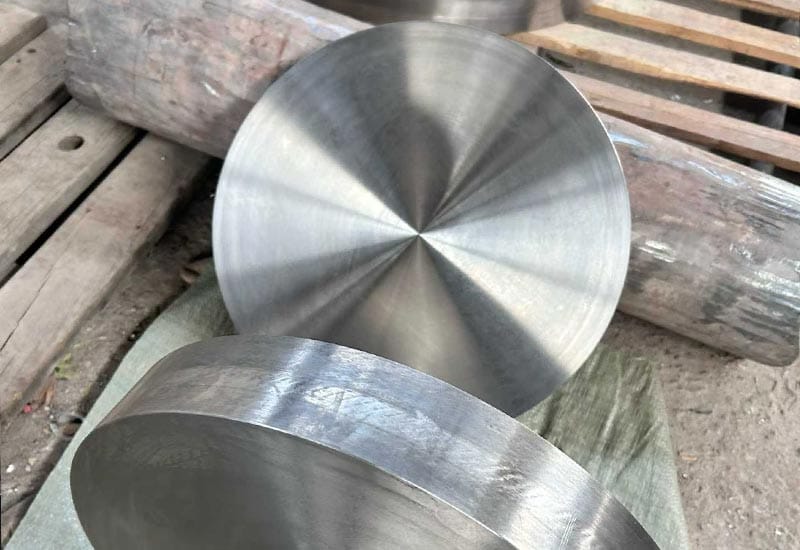
Review the أقراص التيتانيوم مزورة product scope and the available custom titanium manufacturing services. For a titanium forging enquiry, share the drawing, material condition, quantity and the acceptance issue described above. Ask the team to confirm the offered route and documentation for your specific project. Use the enquiry form below or the صفحة الاتصال to begin the technical review.
Frequently asked questions
What is the main review question for titanium forging?
Clarify casting or forging for a machined blank before production. Identify section transitions and grain-flow orientation and record the final condition and acceptance basis on the controlled drawing.
Which material details should a titanium forging order contain?
Choose the specified alloy, forging condition and product standard together. A cast alloy label cannot establish the acceptance basis for a forging. Retain the connection between the physical material and the relevant heat or lot records.
What acceptance evidence is needed for titanium forging?
Agree a mapped blank inspection and coupon-location review. Record the method, part condition, drawing revision, acceptance criteria and actual results. Add application validation where the component duty requires it.
Does one sample approve future titanium forging production changes?
No. Review changes to material, geometry, fixtures, finishing and inspection against the accepted evidence. Preserve the machining reference faces and the approved manufacturing scope in repeat orders.
What should be included in a titanium forging enquiry?
Send the drawing and model, alloy and condition requirements, quantity, application, supply boundary and required records. Highlight casting or forging for a machined blank so the supplier can address the specific project question.